








Mona BroschárEternal Touch
Mona BroschárEternal Touch
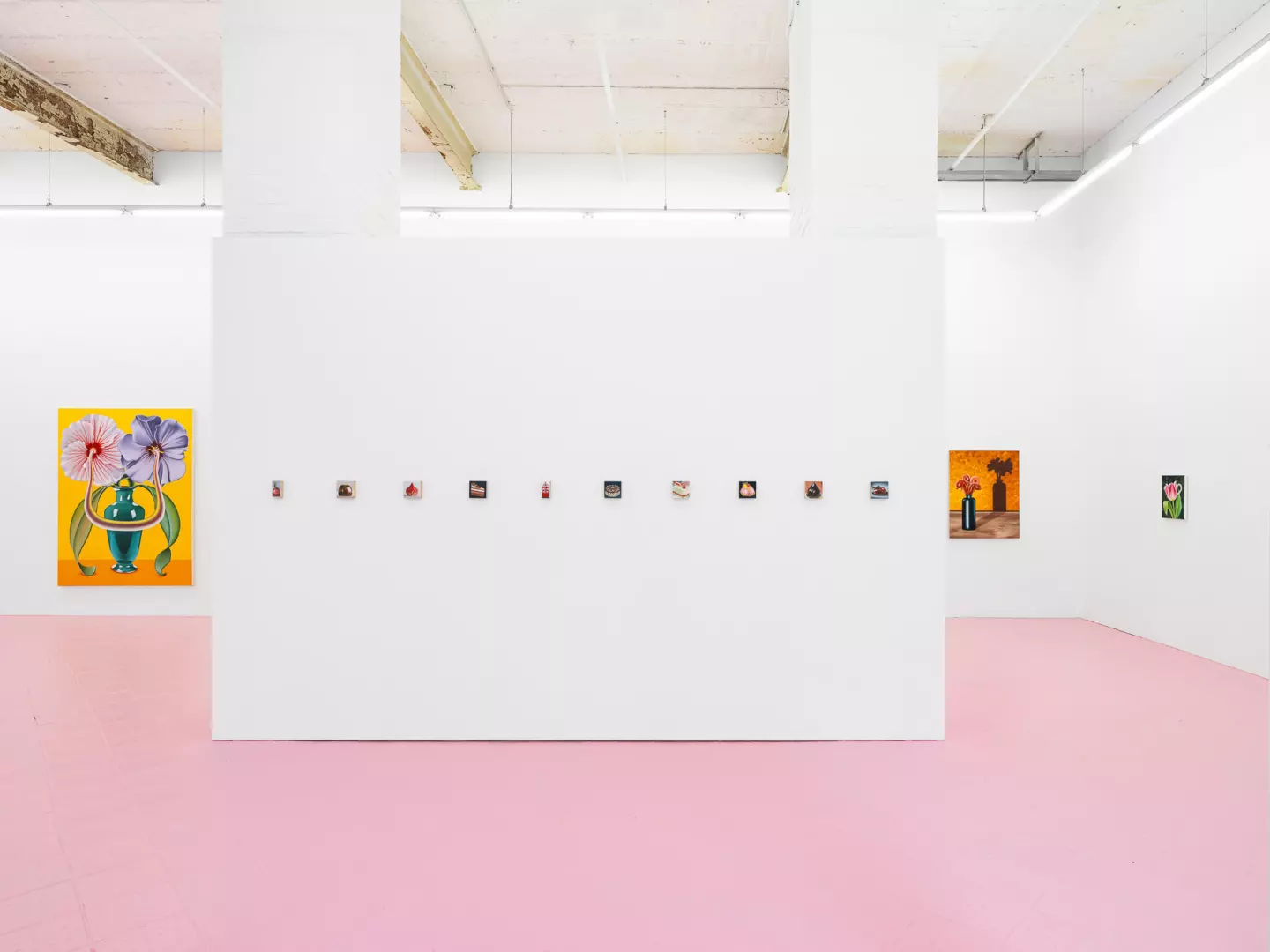
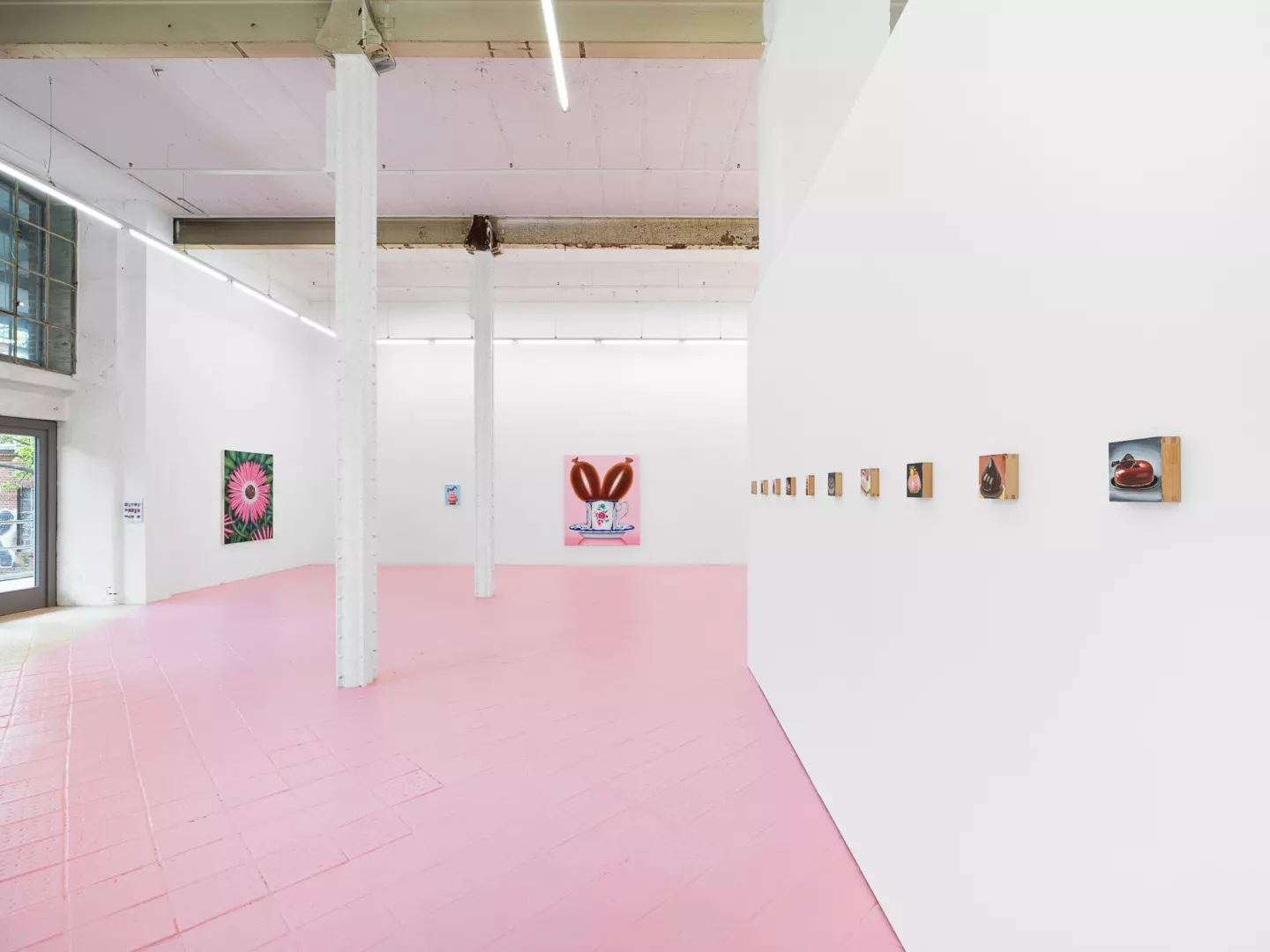
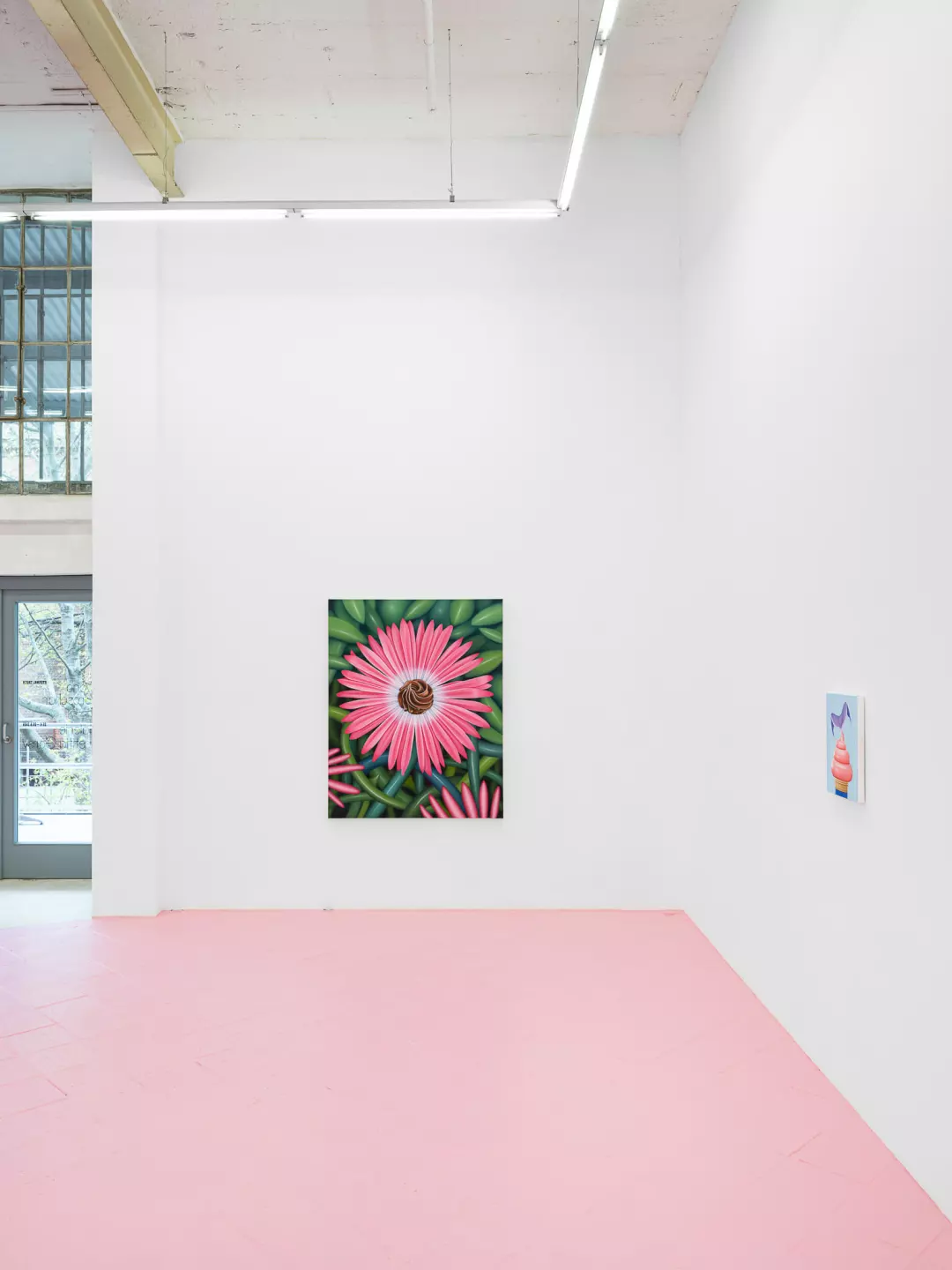
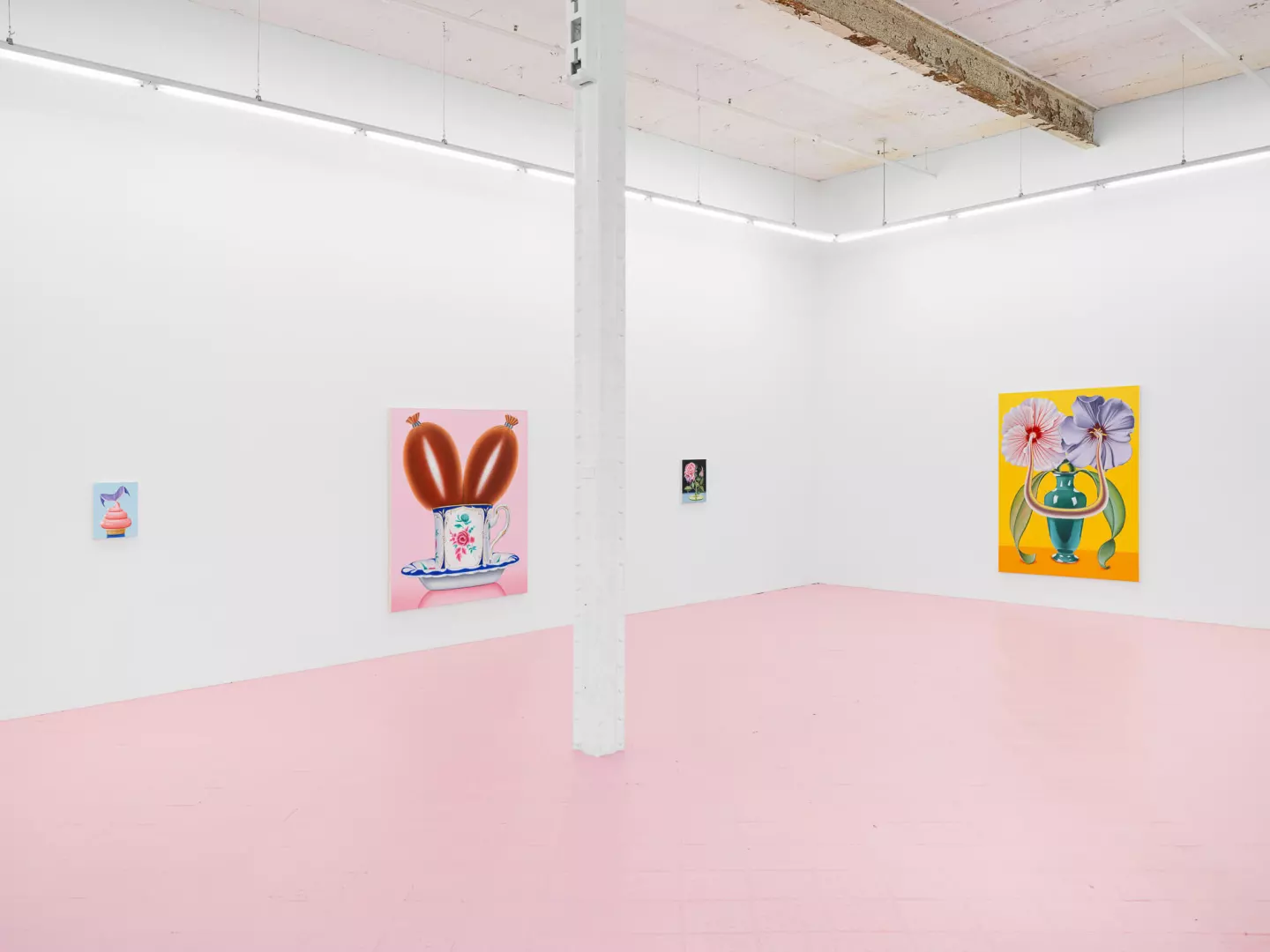
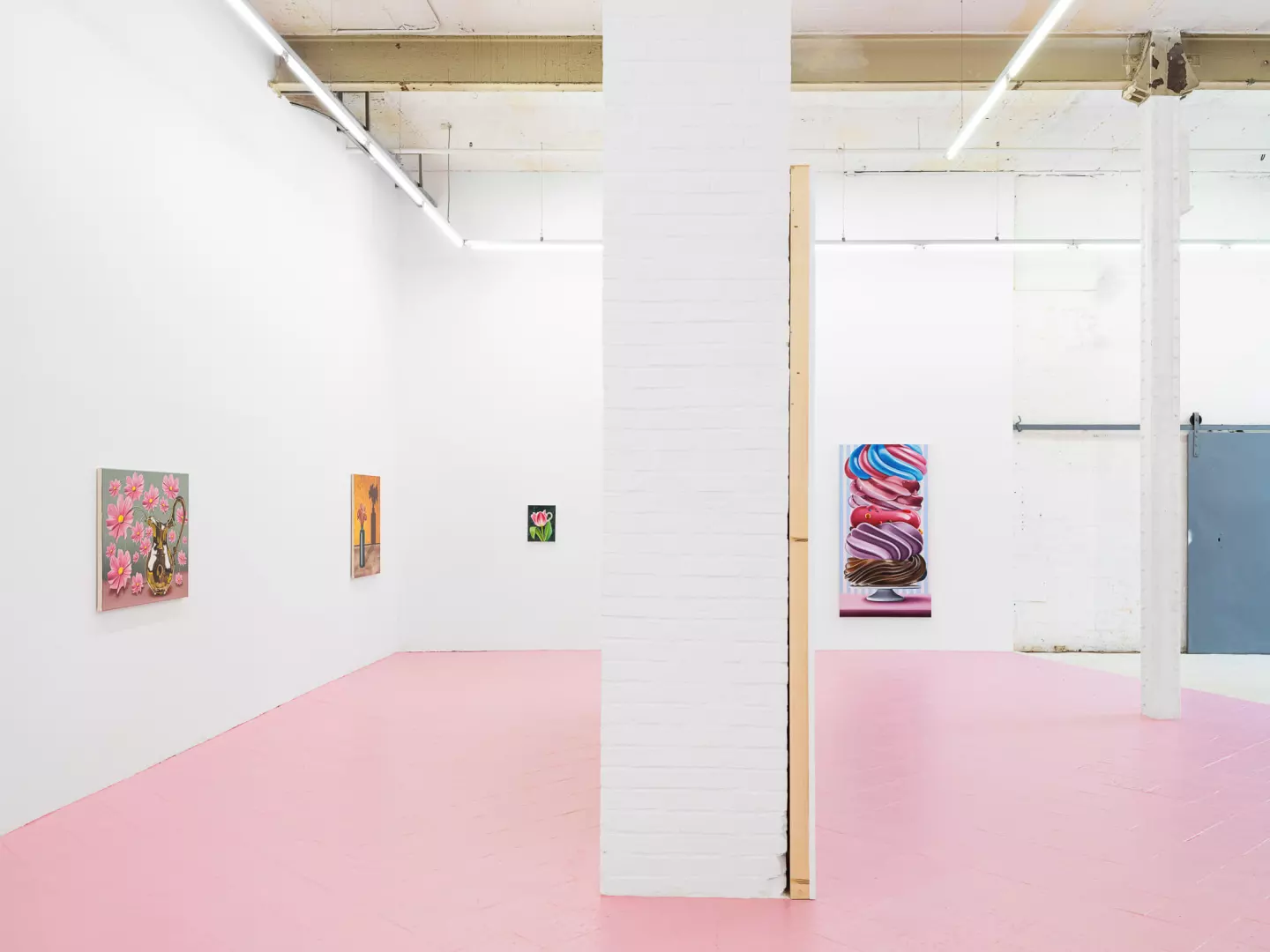
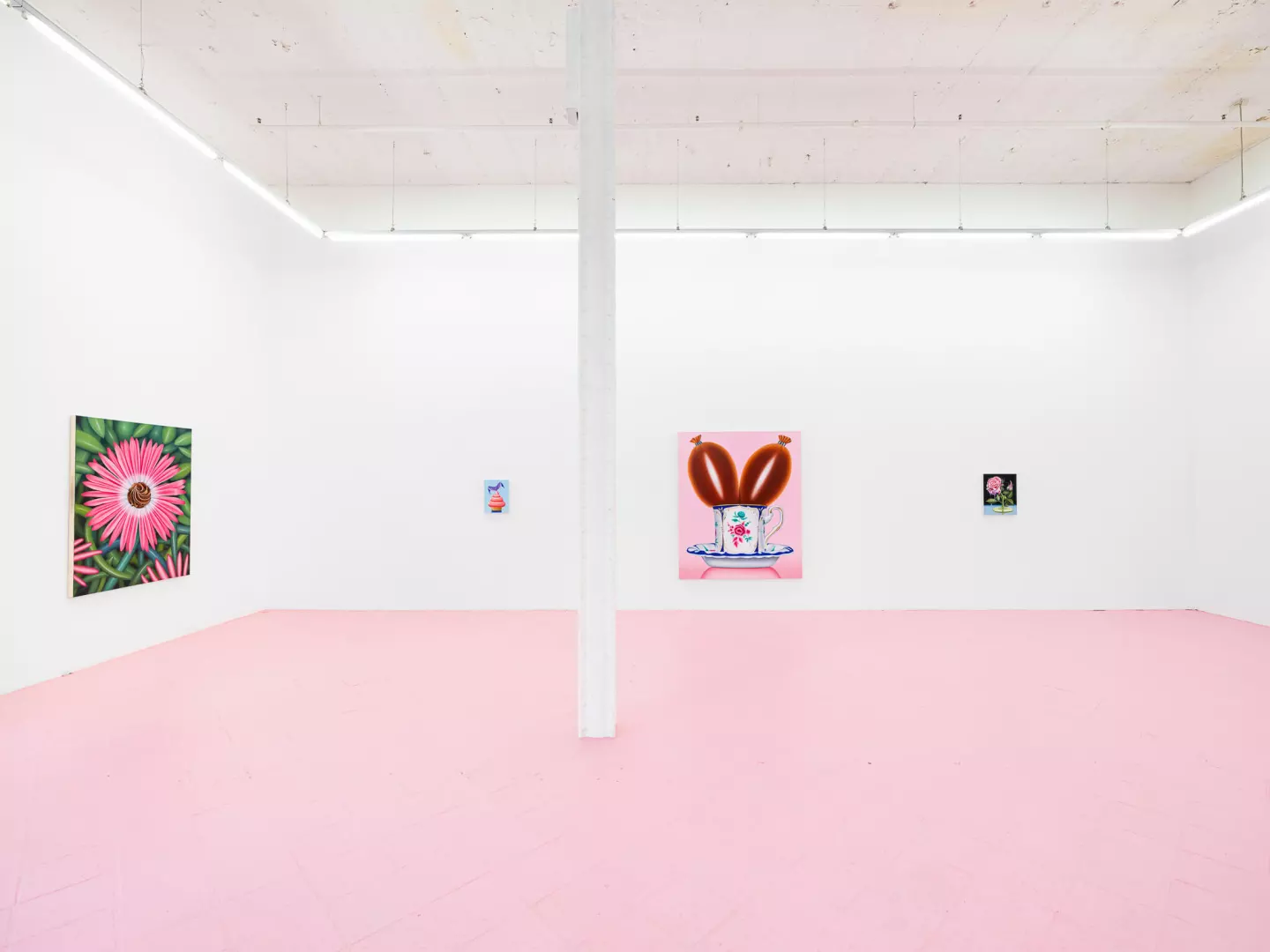
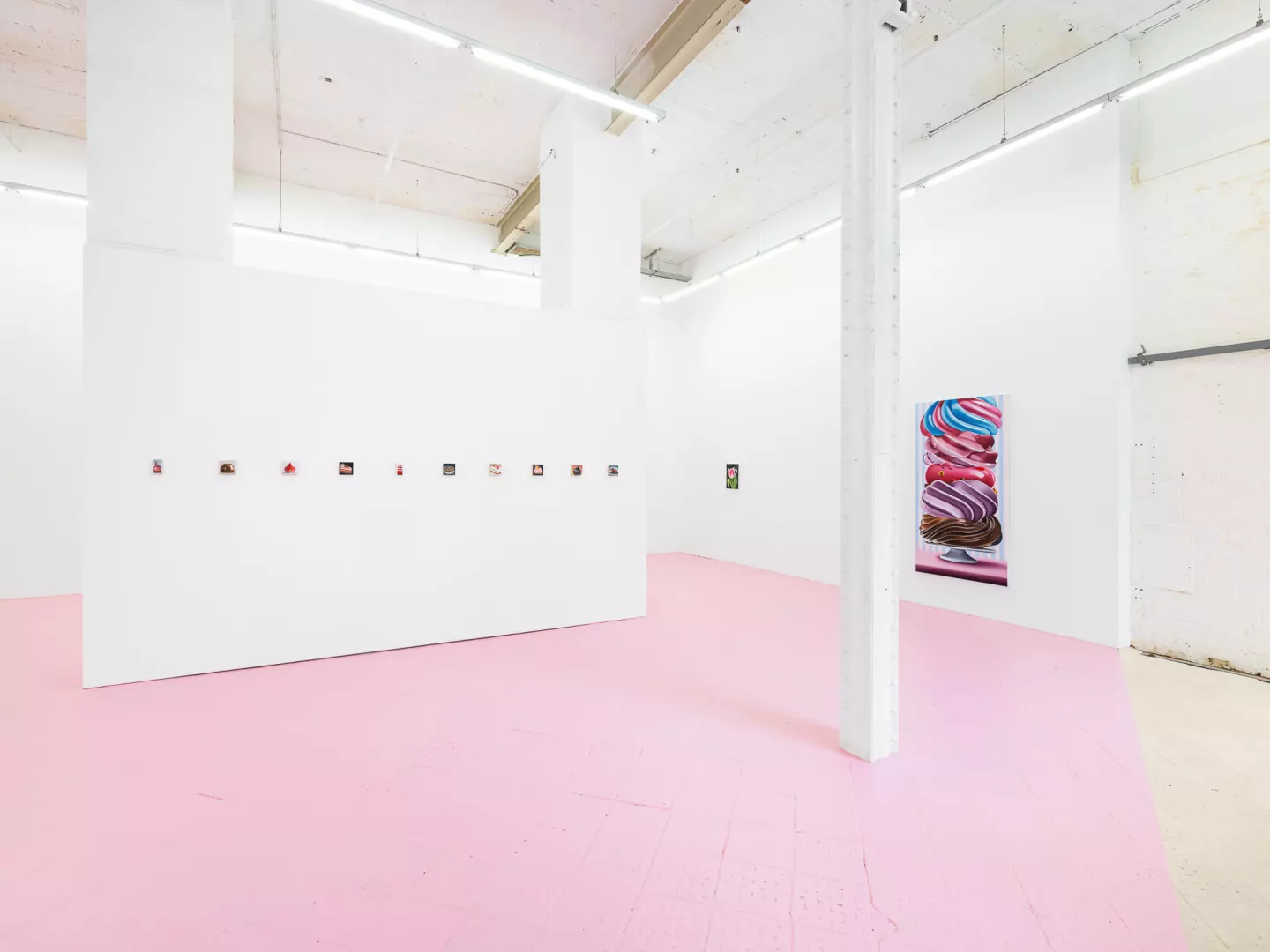
Two glossy sausages protrude from a finely painted porcelain cup. A tulip blossom has a handle, a fish fin dissolves into a soft-serve ice cream, and a pink flower is held together by a dollop of chocolate cream – precisely piped like a pastry decoration. Mona Broschár stages surreal hybrid beings not as opposites, but as a self-evident reality. Her works move confidently between the history of painting and Instagram aesthetics, between seriousness and irony, between nature and simulation, reflecting beauty, desire, and the visual culture of the present.
Seemingly separate pictorial worlds merge on her canvases: the art historical tradition of the still life meets the glossy aesthetics of contemporary consumer goods. Vases, jugs, and floral arrangements recall 17th-century vanitas paintings. Yet instead of withered flowers and rotting fruit, there are blooming blossoms, soft-serve ice cream, and sausages. And while the old masters invoked transience and memento mori, an excessive, almost unsettling sensuality comes to the foreground. The flowers appear polished, as if they had not grown, but had been cast – from plastic, silicone, or digital code.
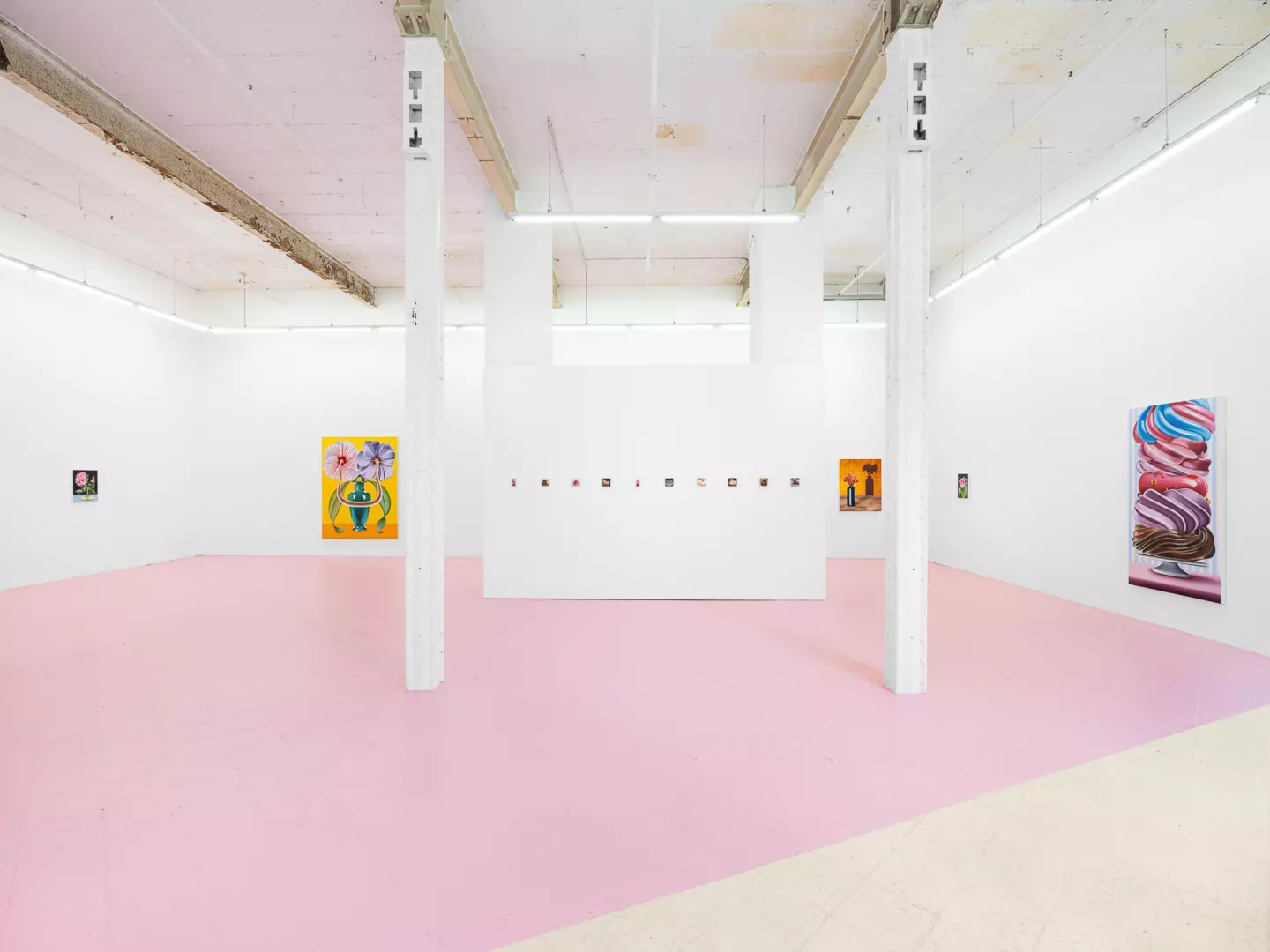
At first glance, the paintings recall staged product photography and food styling; the pop culture of the 1980s and 1990s also shimmers through – garish colours, sticker-book happiness, the innocence of cartoons. They play with that perfect high-gloss aesthetic that confronts us daily in magazines, social media feeds, and advertisements. Broschár’s pleasure in craftsmanship is clearly palpable: the tower of stacked meringues and soft-serve ice cream – chocolate brown, purple, pink – is painted with an almost sculptural physicality. Inevitably, the question arises whether desire is directed toward the depicted object – or toward the image itself.
Mona Broschár sees herself as an observing collector. Her filter is constantly switched on, an A6 sketchbook always at hand. Inner chains of association, everyday objects, findings from the internet – the more image references there are, the freer the work becomes. Whatever disrupts the central idea has to go. An attitude reflected in her meticulous compositional work. A painting is finished when she reaches the feeling that it could be real – as though what is painted might emerge from the canvas. She partially generates light sources and shadows from imagination: “I make no claim to reality,” she explained during a studio visit in April 2026. “I am not a landscape painter trying to depict what she sees, but what is inside my head.”
In times of deep fakes and fake news, in which people spend an average of 33 minutes of their day on the smooth surface of Instagram, Broschár’s paintings can also be interpreted as culturally critical commentaries: on the one hand, their vivid colours, dominant central perspective, and monochrome backgrounds make them perfectly suited for circulation on social media. On the other hand, there is the palpable joy of painting, of working with colour, shadow, and composition, the enduring fascination with the possibilities of painting that outlasts every trend. And the deliberate interplay of small, medium, and large formats adds a further layer of meaning to the motifs, one best experienced in direct encounter.
Titles such as "Fine Dining or A flower is a flower is a flower" encourage an ironic and humorous reading of the compositions. And yet there is also something else perceptible: a genuine affection for the visible world. For the humour does not arise through ridicule, but through affectionate exaggeration. Even in her everyday life, objects seem to take on a life of their own. Everything surrounding her has character. The sausage becomes a sculpture, the ice cream a monolith, the flower an icon. The precision with which she renders floral structures, stamens, and refractions of light reveals an intense engagement with the natural model. Pink cosmos flowers float almost weightlessly from a jug. Eighteen times the same blossom – and yet each one is different, drawn by hand, without a projector. The months-long painterly attention is a form of mindfulness. The small deviations are intentional. Nature, too, is never always the same and sometimes too beautiful to alter.
Text by Dr. Sarah Alberti
Works
-
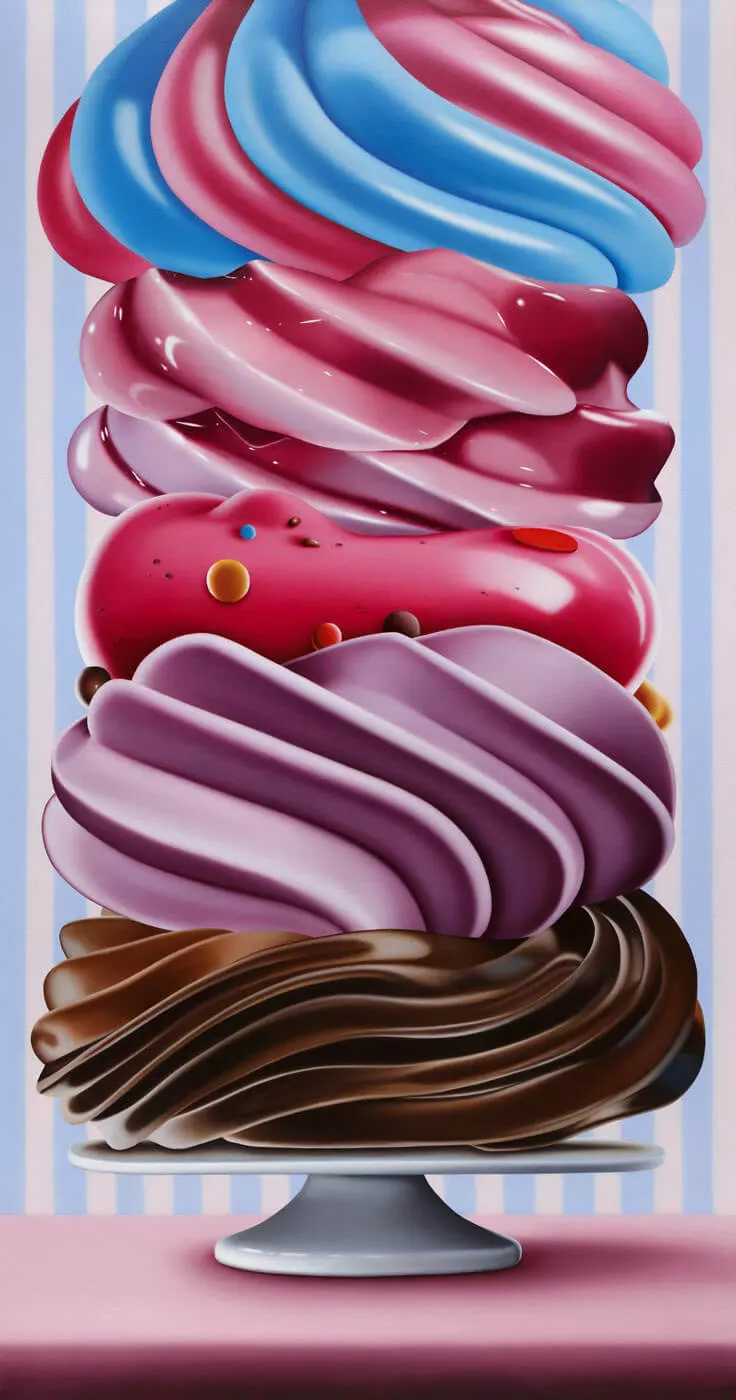 The weight of the world, 2026, Oil and acrylic on canvas, 190 × 100 cm
 -
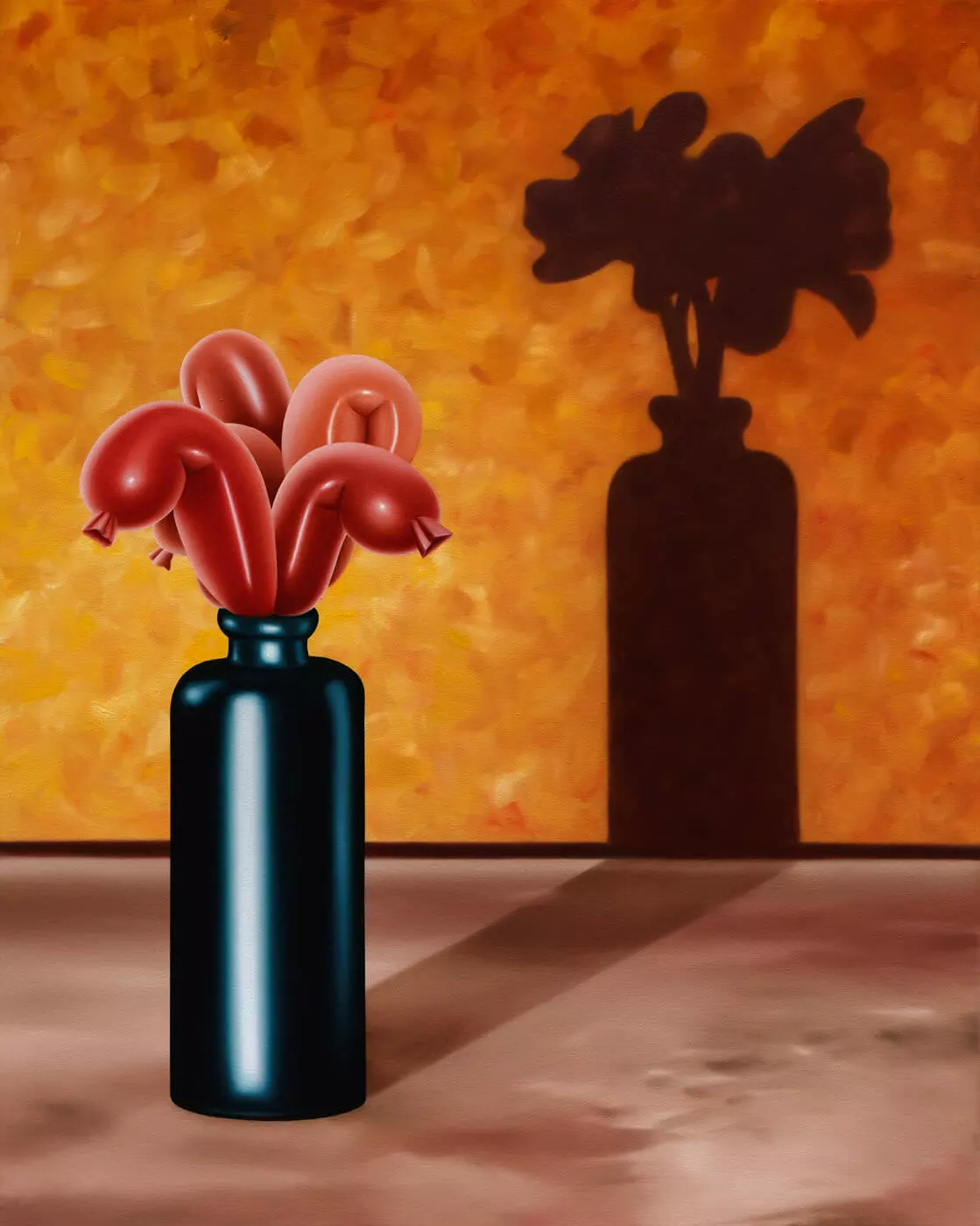 One in a million, 2026, Oil and acrylic on canvas, 100 × 80 cm
 -
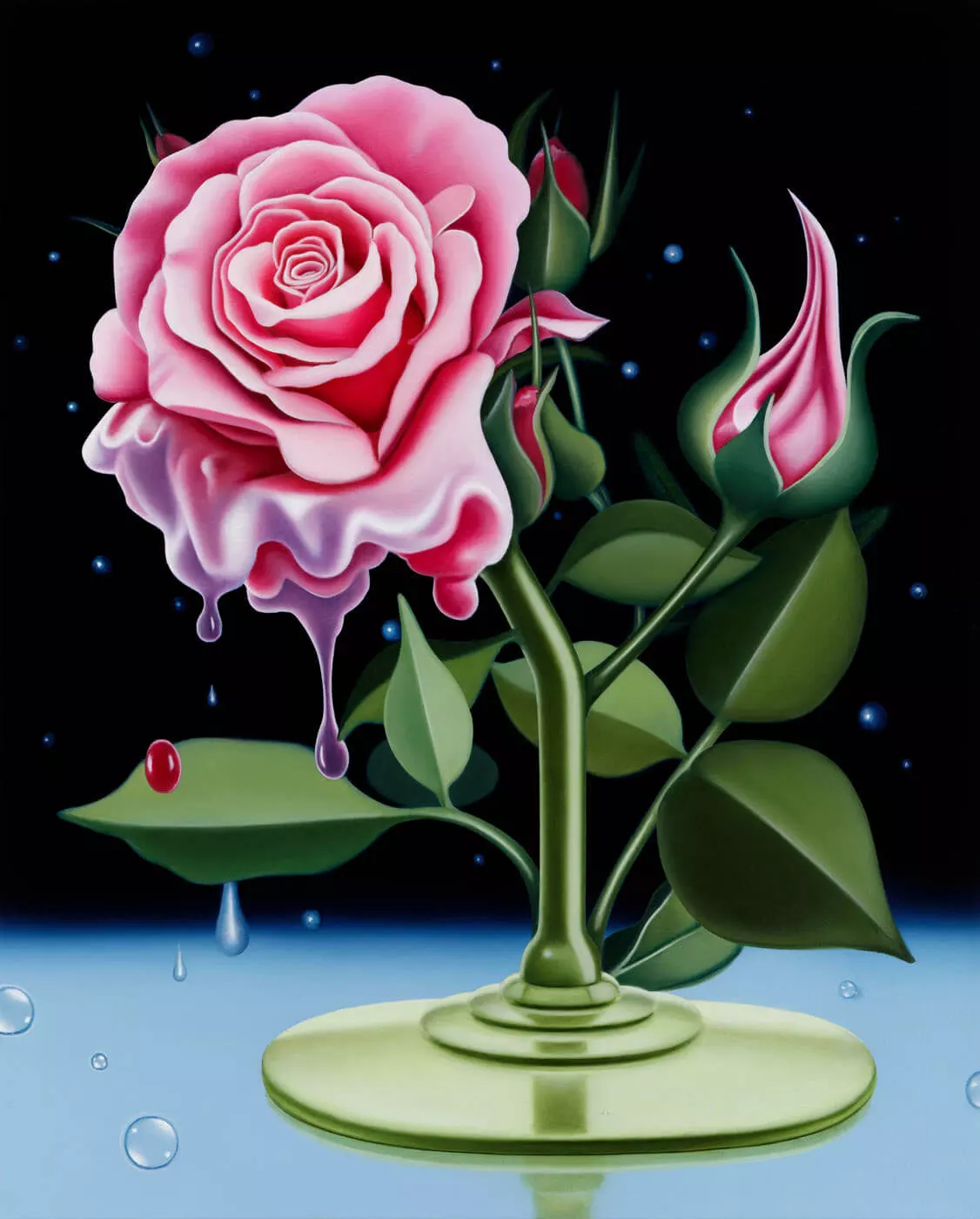 In dreams, 2026, Oil and acrylic on linen, 50 × 40 cm
 -
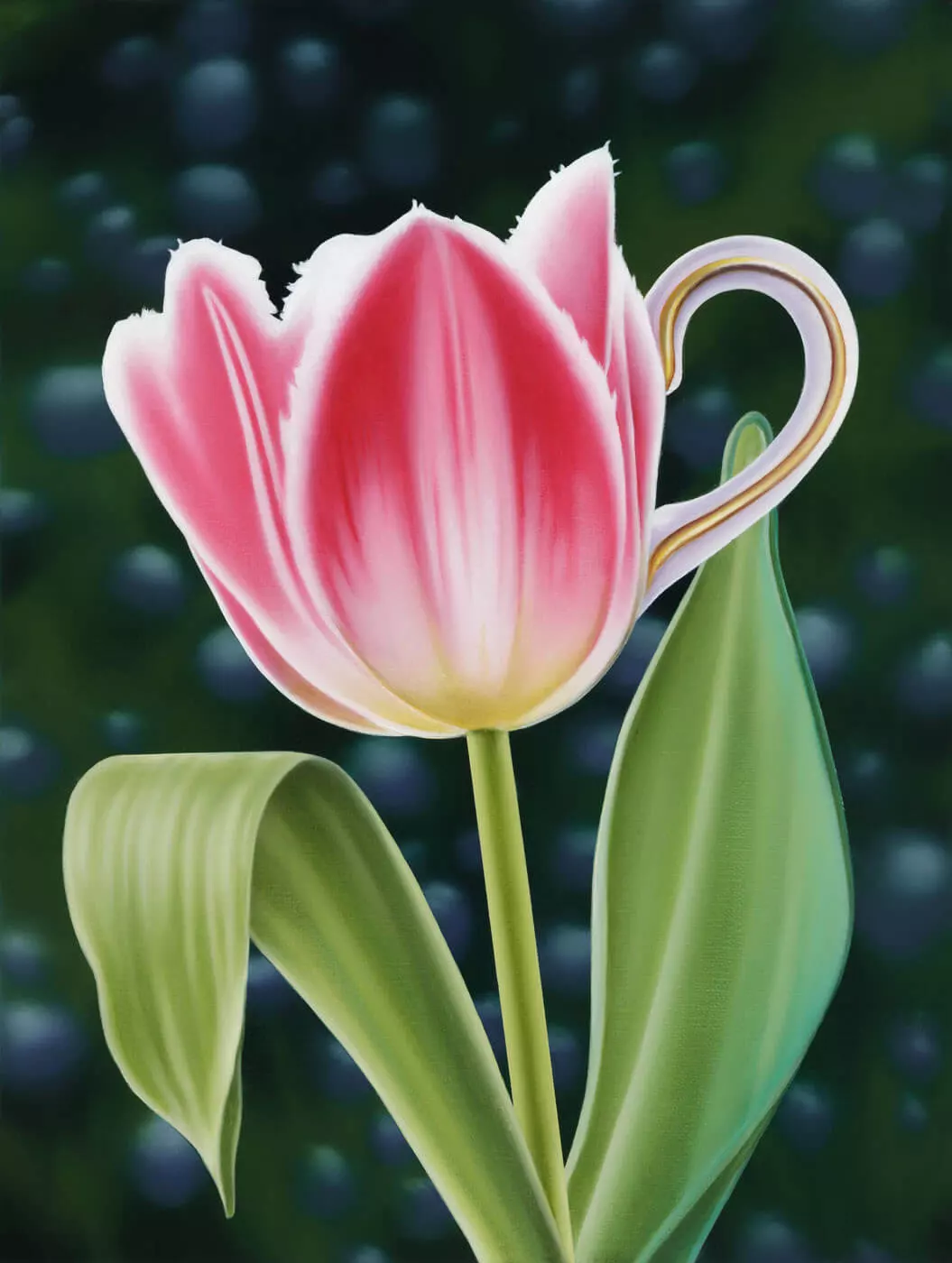 Awakening, 2026, Oil and acrylic on linen, 40 × 30 cm
 -
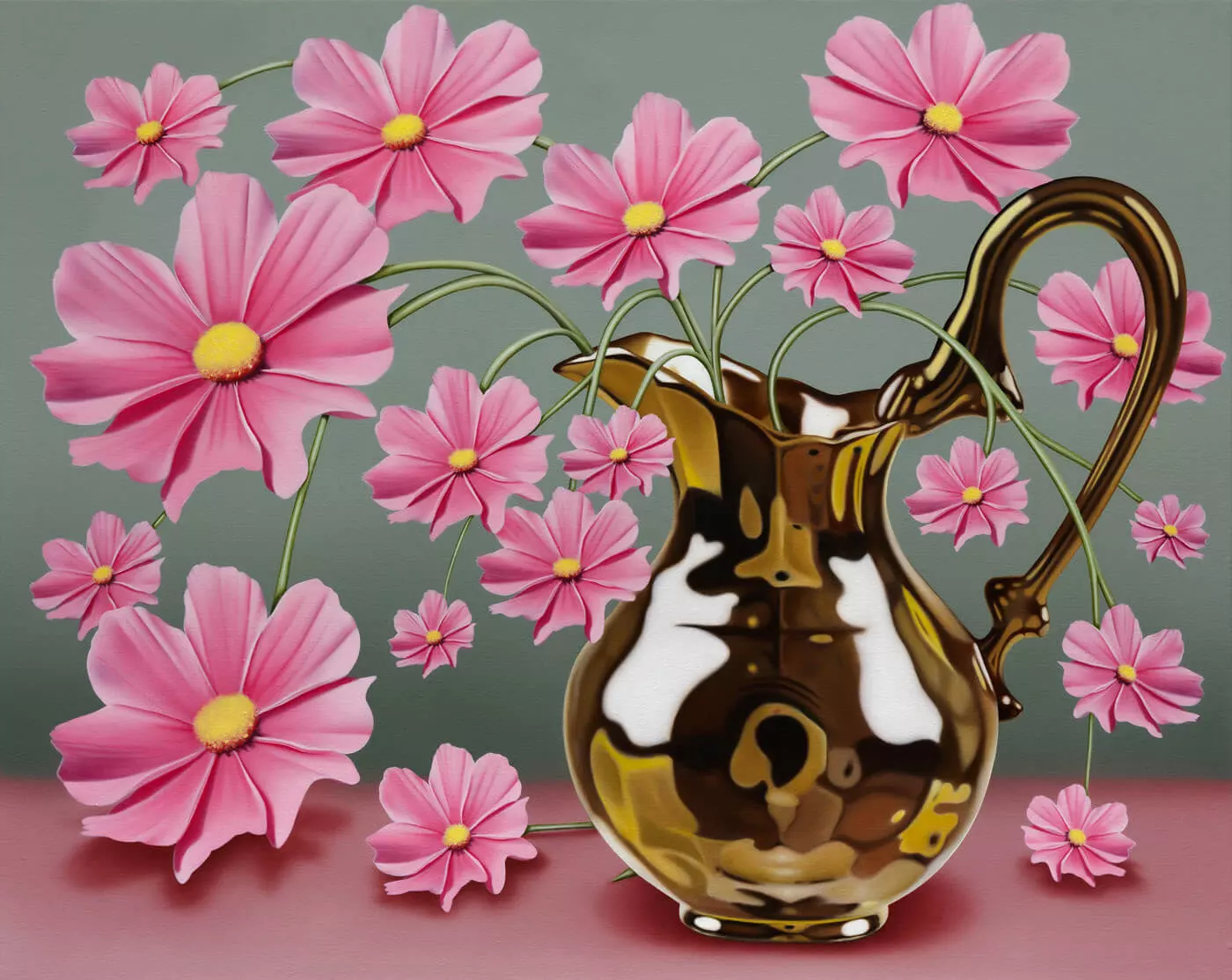 A flower is a flower is a flower is a flower, 2026, Oil and acrylic on canvas, 80 × 100 cm
 -
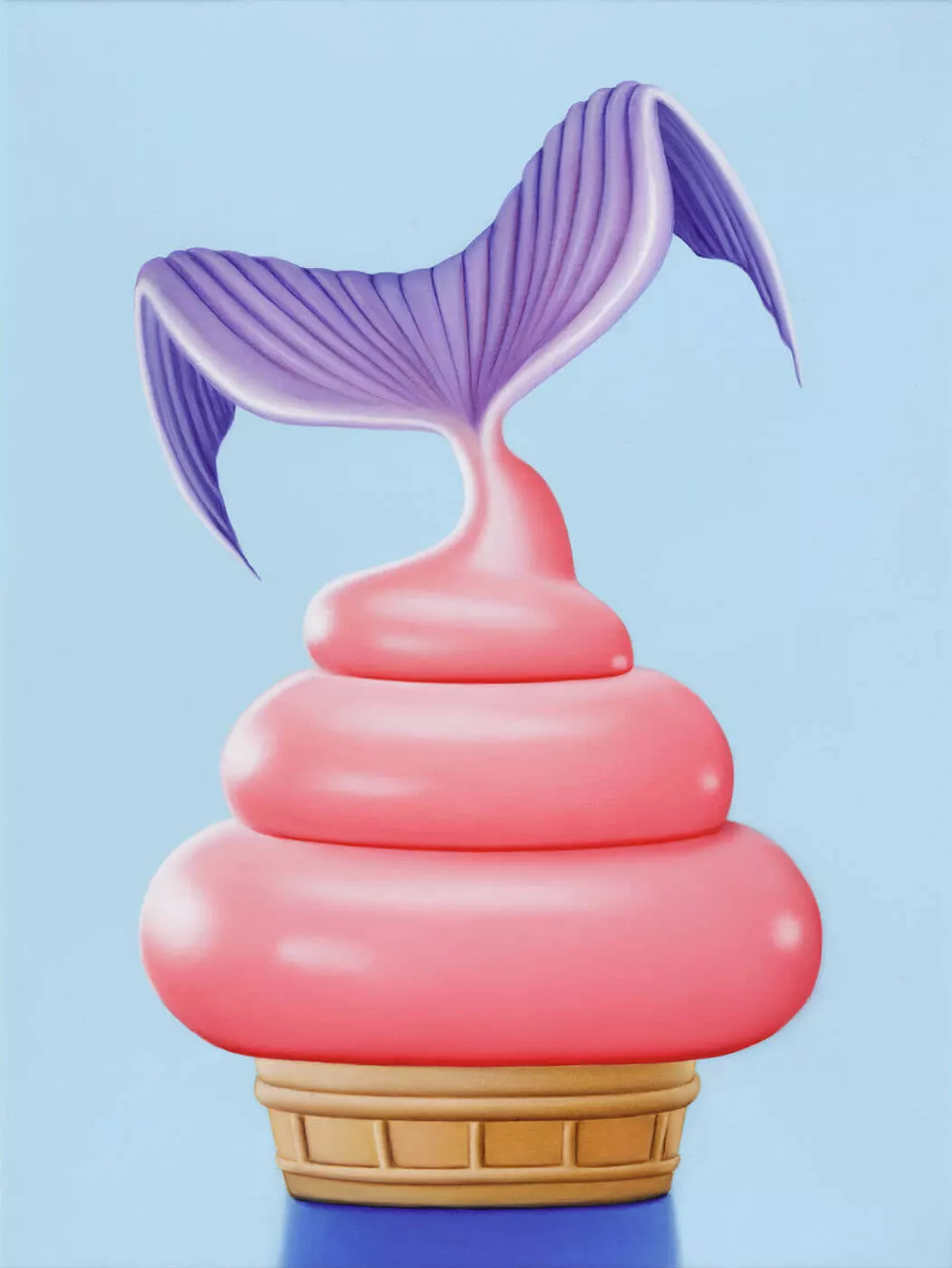 Abgetaucht, 2026, Oil and acrylic on linen, 40 × 30 cm
 -
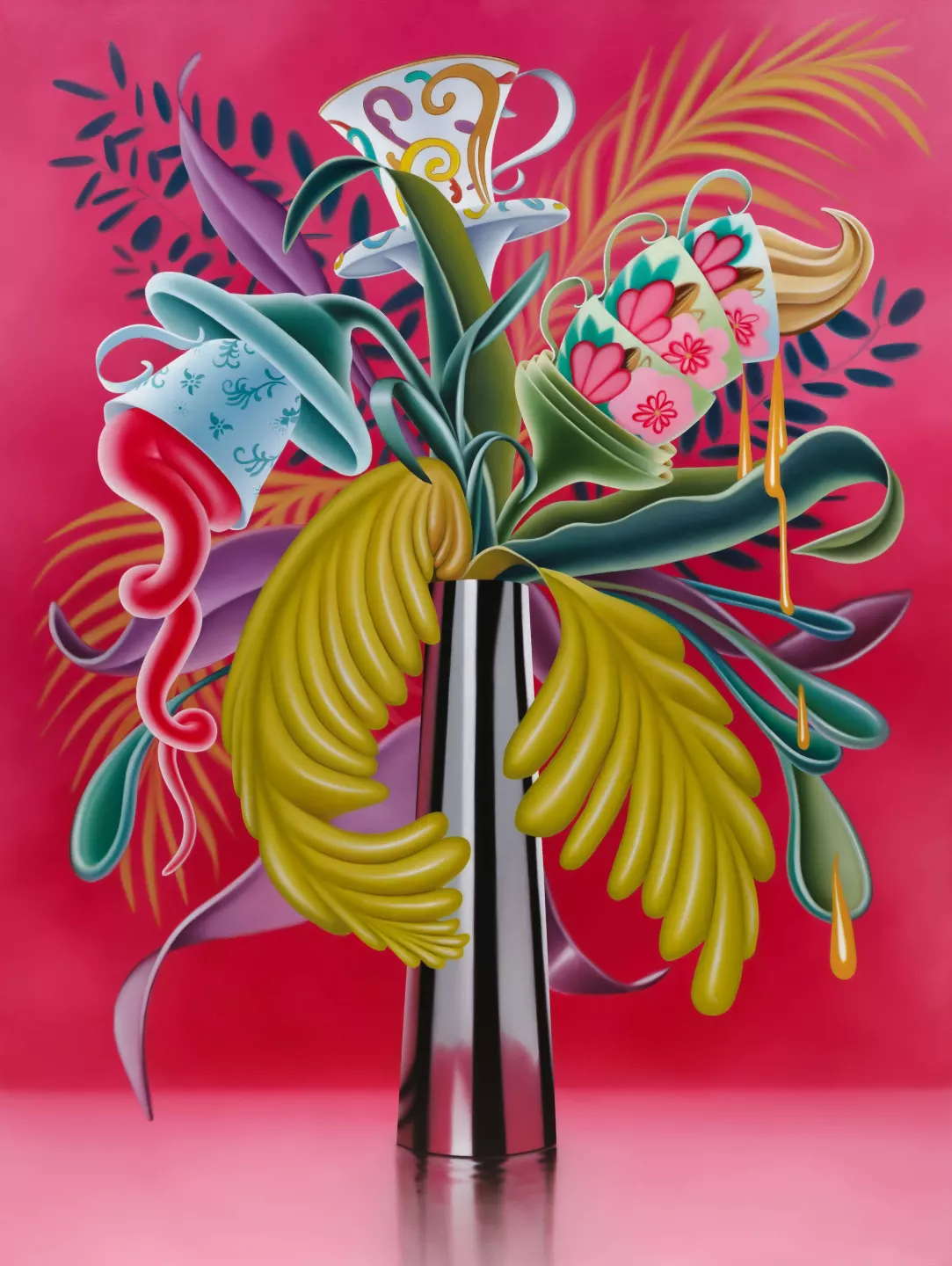 Nektar, 2025, Oil and acrylic on canvas, 200 × 150 cm
 -
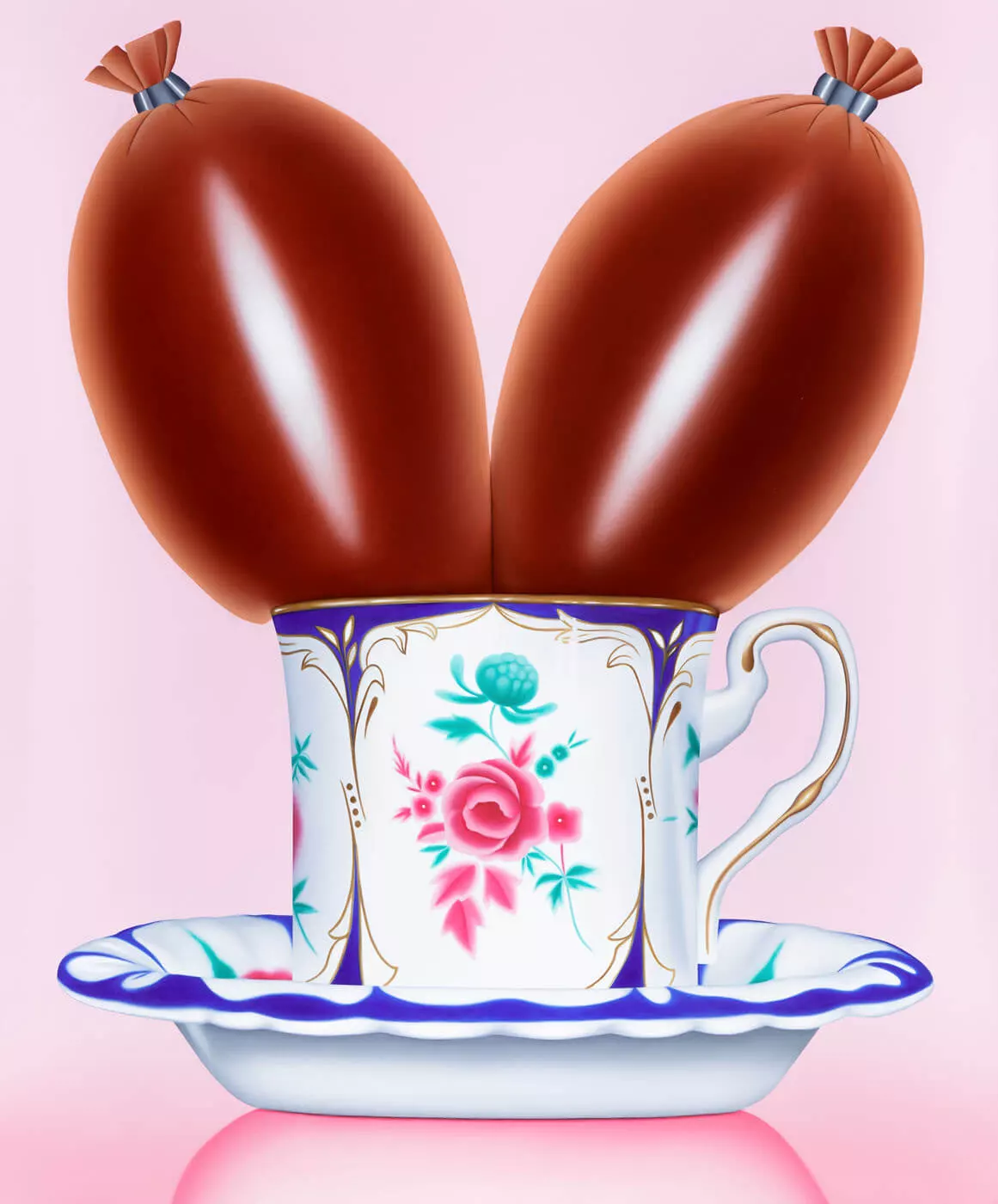 Fine dining, 2023, Oil and acrylic on canvas, 180 × 150 cm
 -
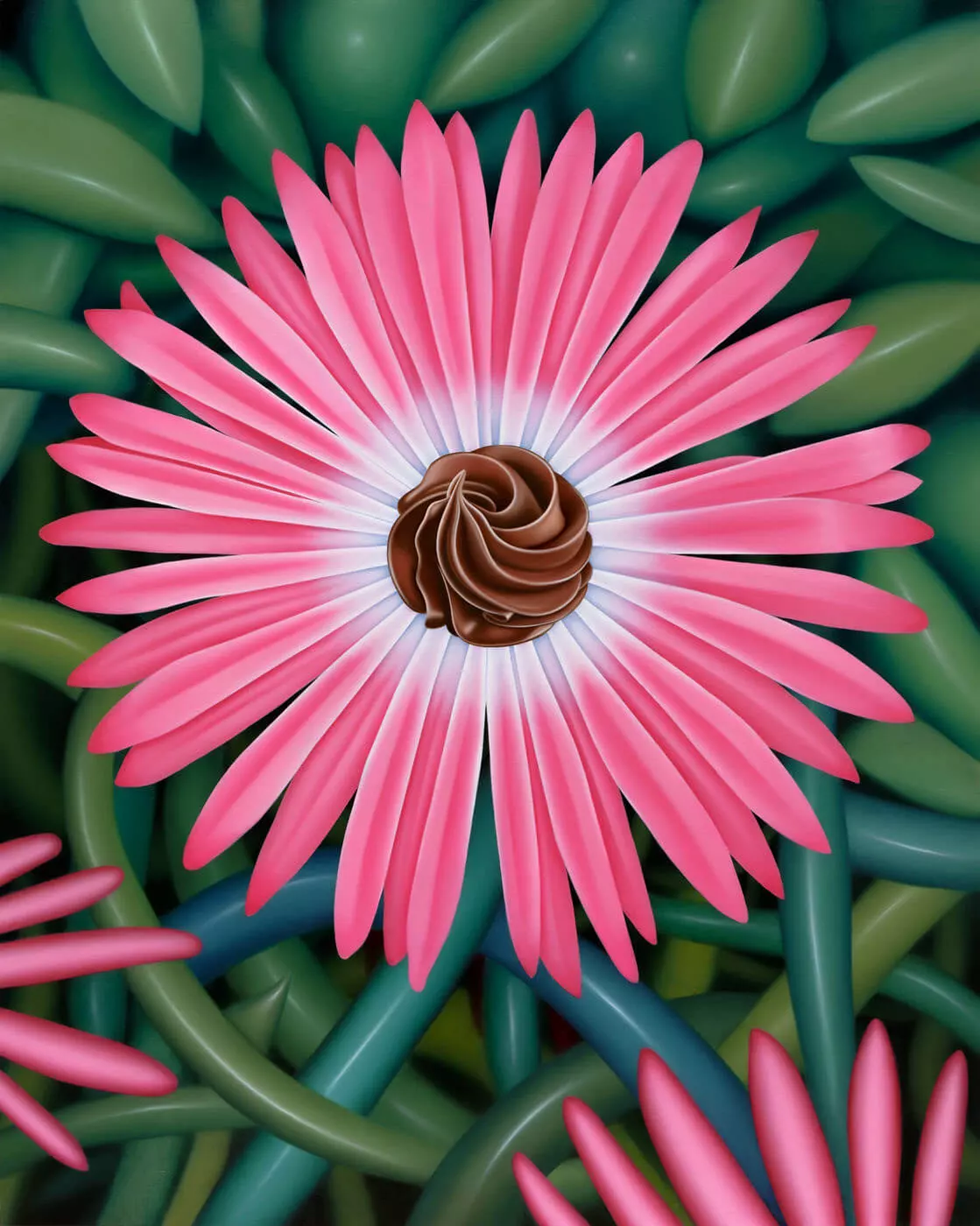 Centre of attention, 2023, Oil and acrylic on canvas, 150 × 120 cm
 -
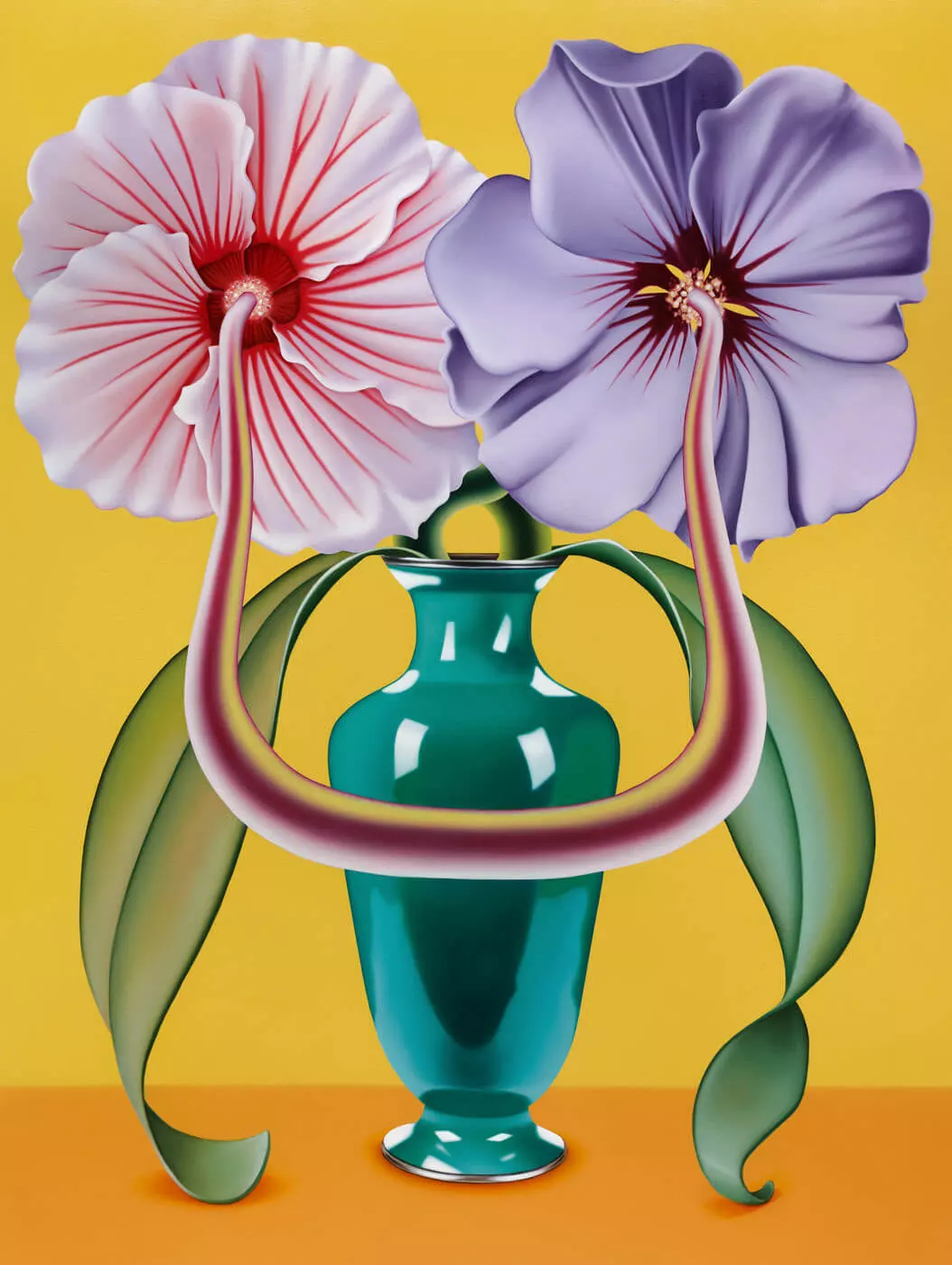 Happy Day, 2025, Oil and acrylic on canvas, 200 × 150 cm
 -
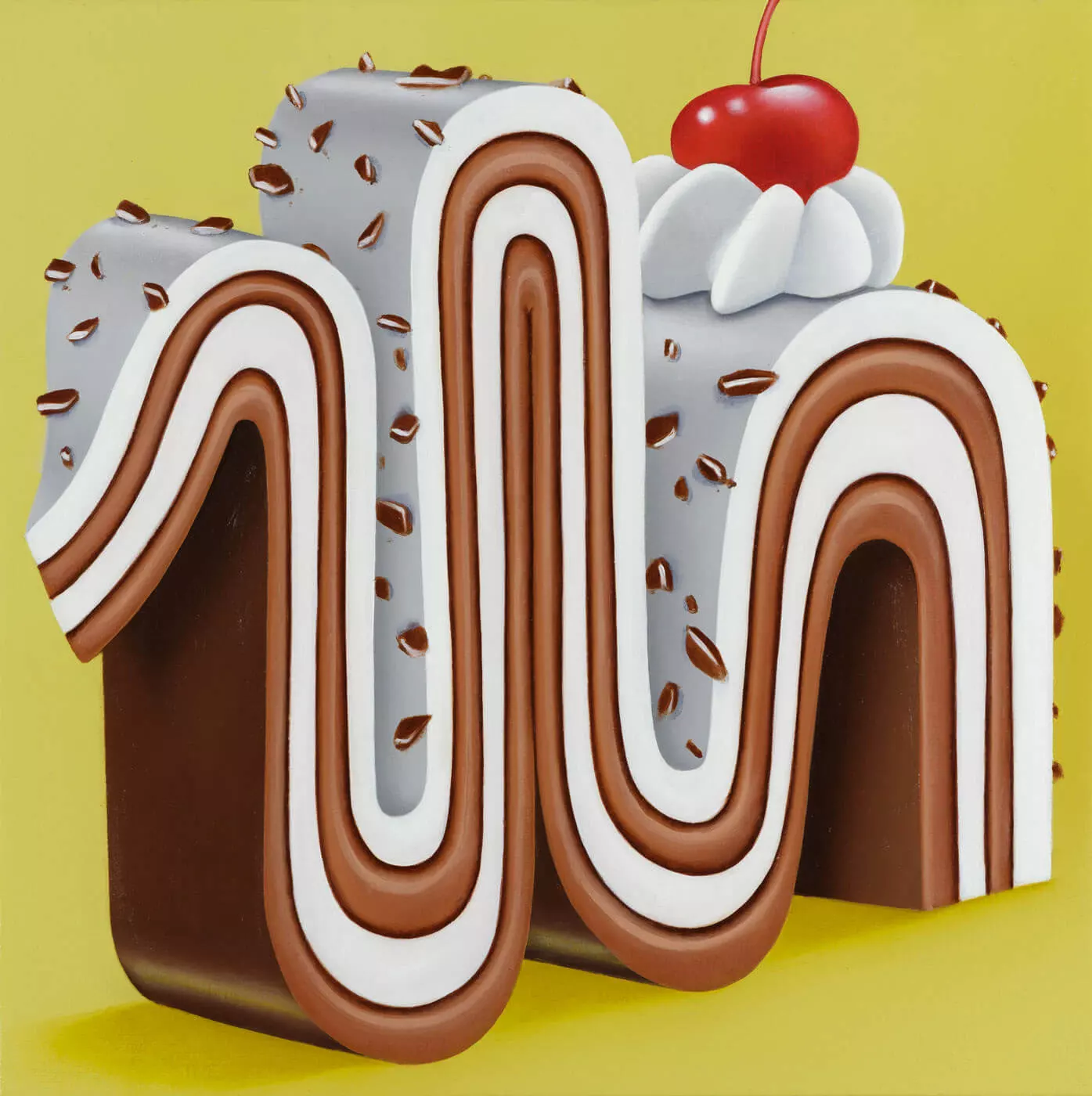 No regrets, 2025, Oil and acrylic on linen, 30 × 30 cm
 -
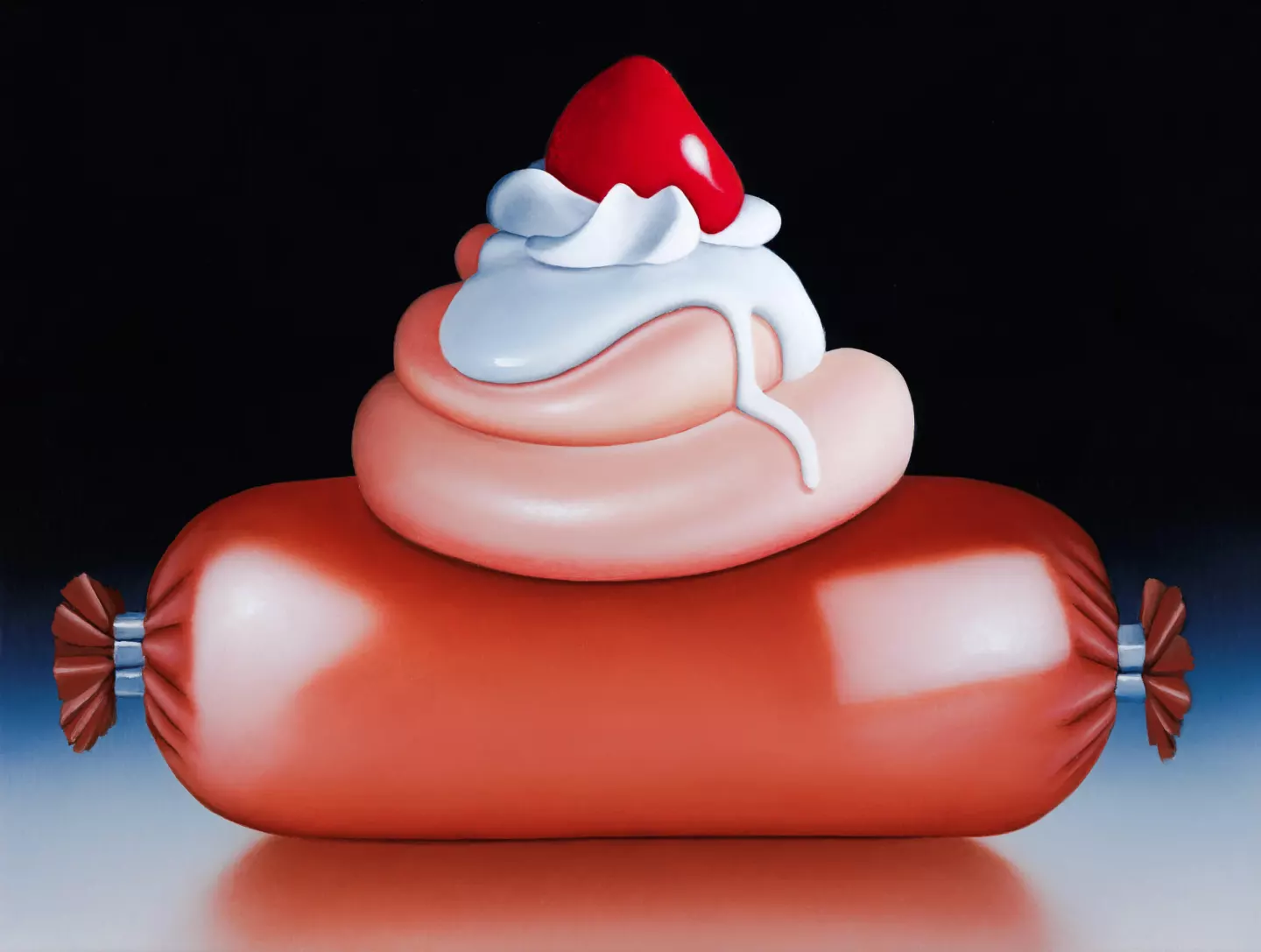 Fearless, 2024, Oil and acrylic on linen, 30 × 40 cm
 -
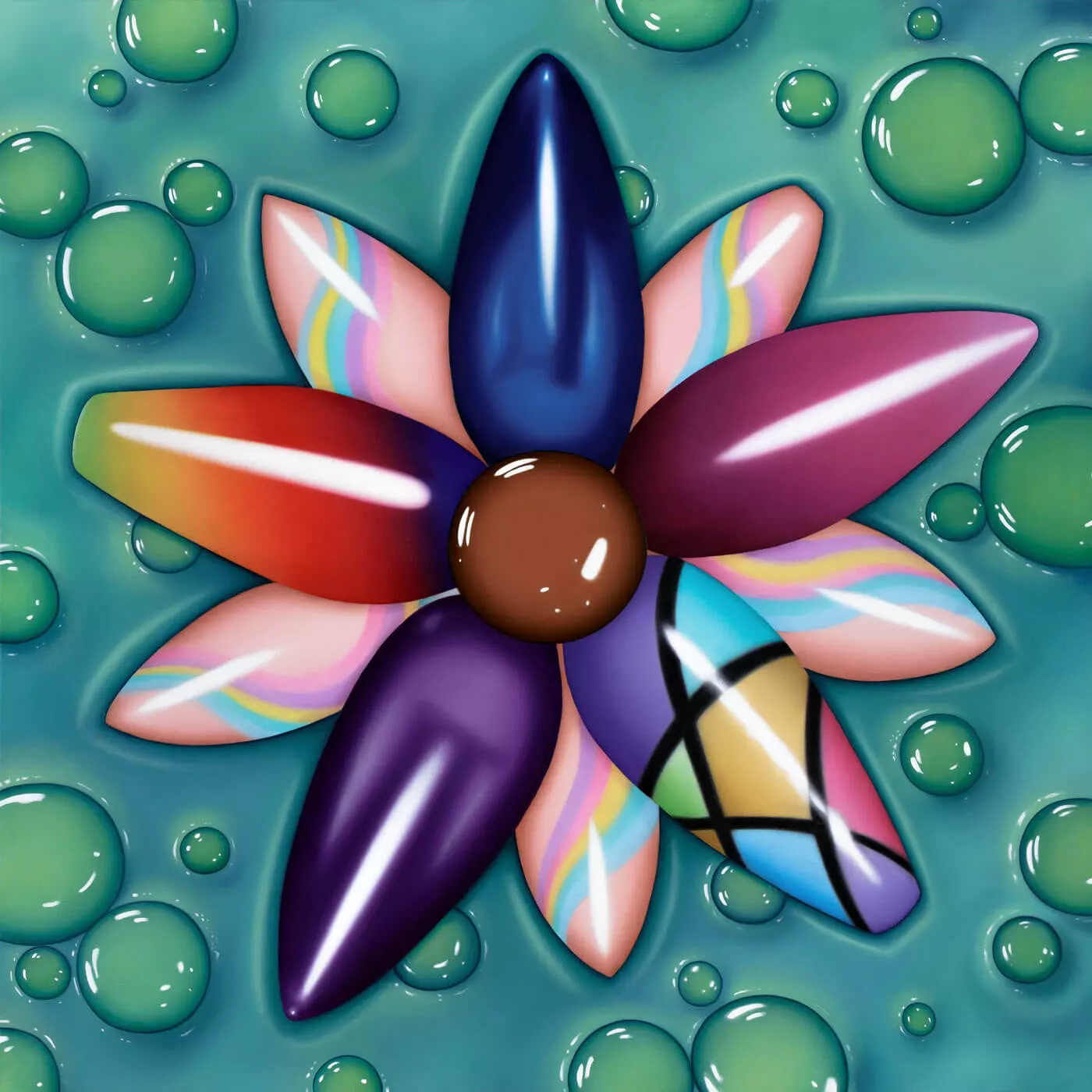 How does it make you feel?, 2023, Oil and acrylic on canvas, 90 × 90 cm
Contact us for more information.