



Kolja Kärtner SainzDear Painting,
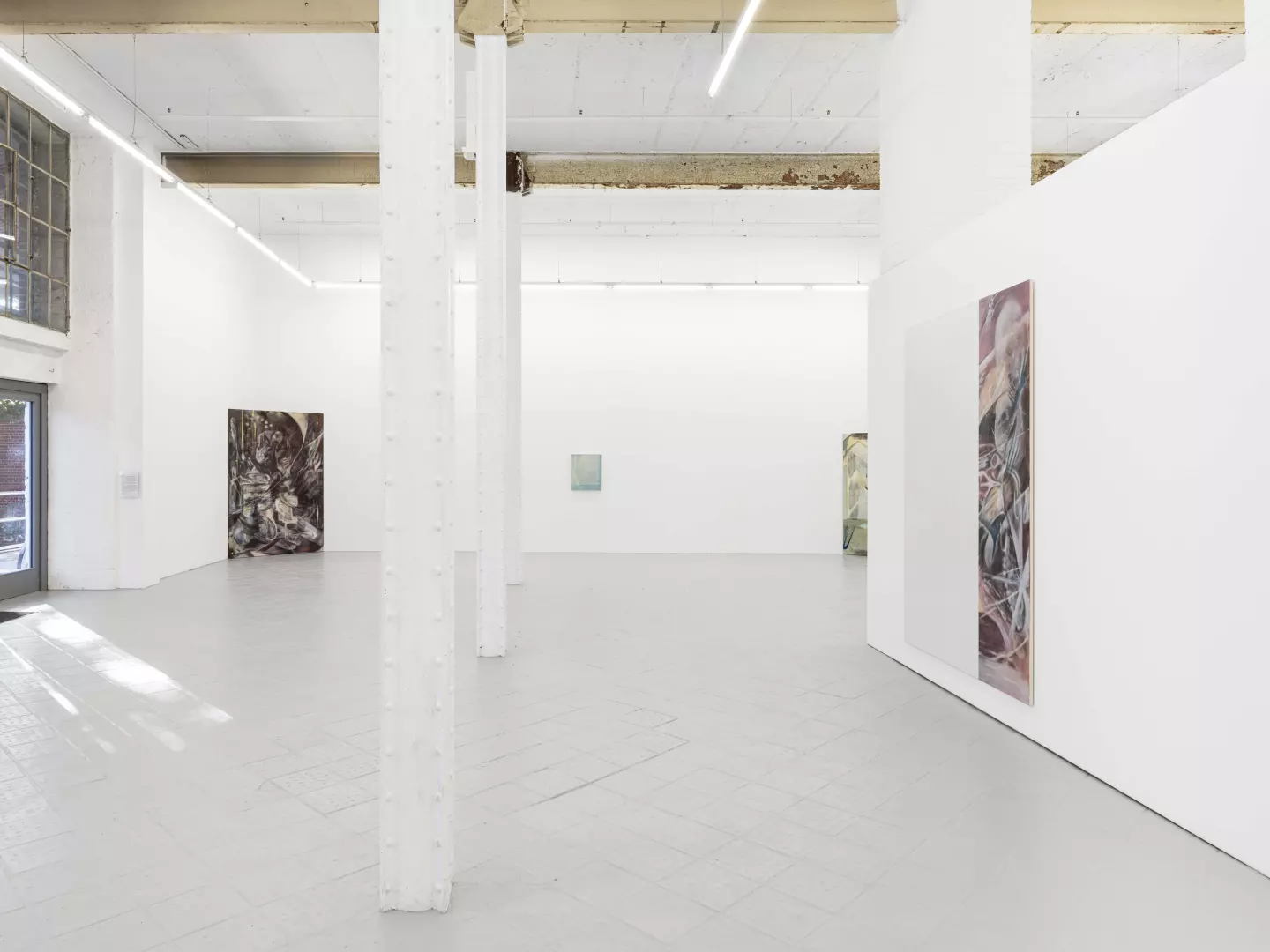
Kolja Kärtner SainzDear Painting,
Kolja Kärtner Sainz (b. 1998 in Mannheim) is an artist living and working in Leipzig.
He studies photography and painting at the Academy of Fine Arts Leipzig (HGB), with graduation in July 2026.
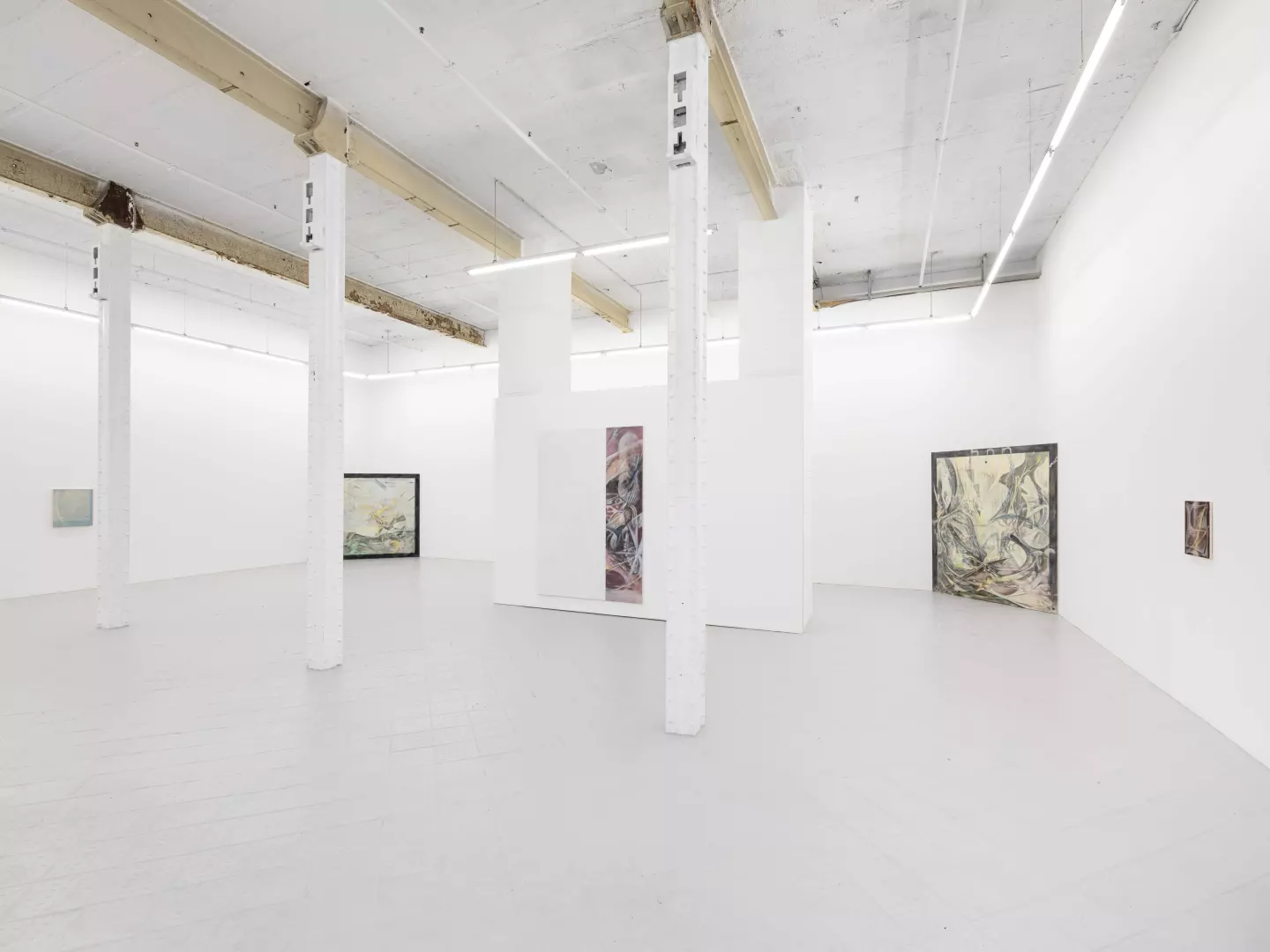
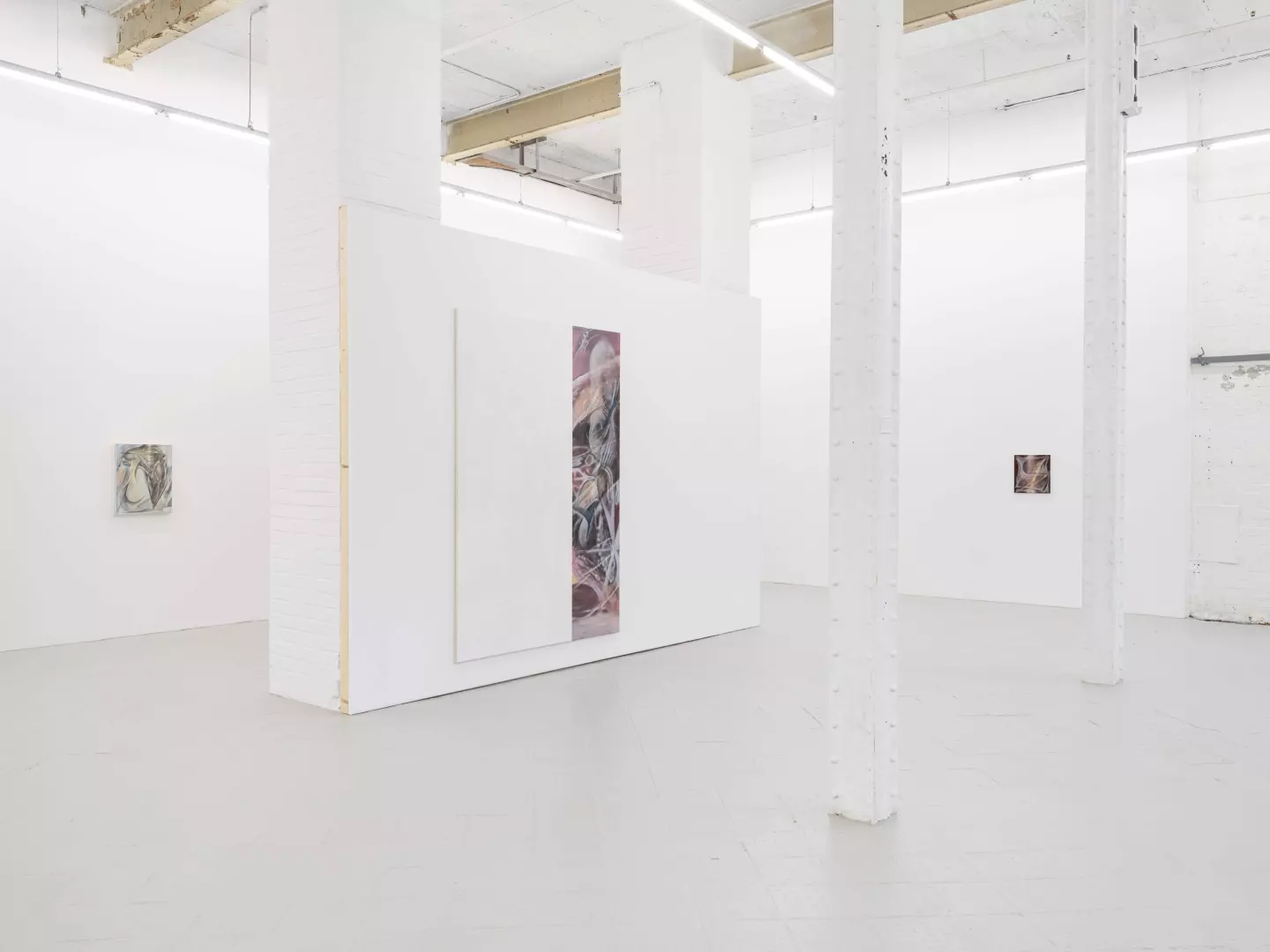
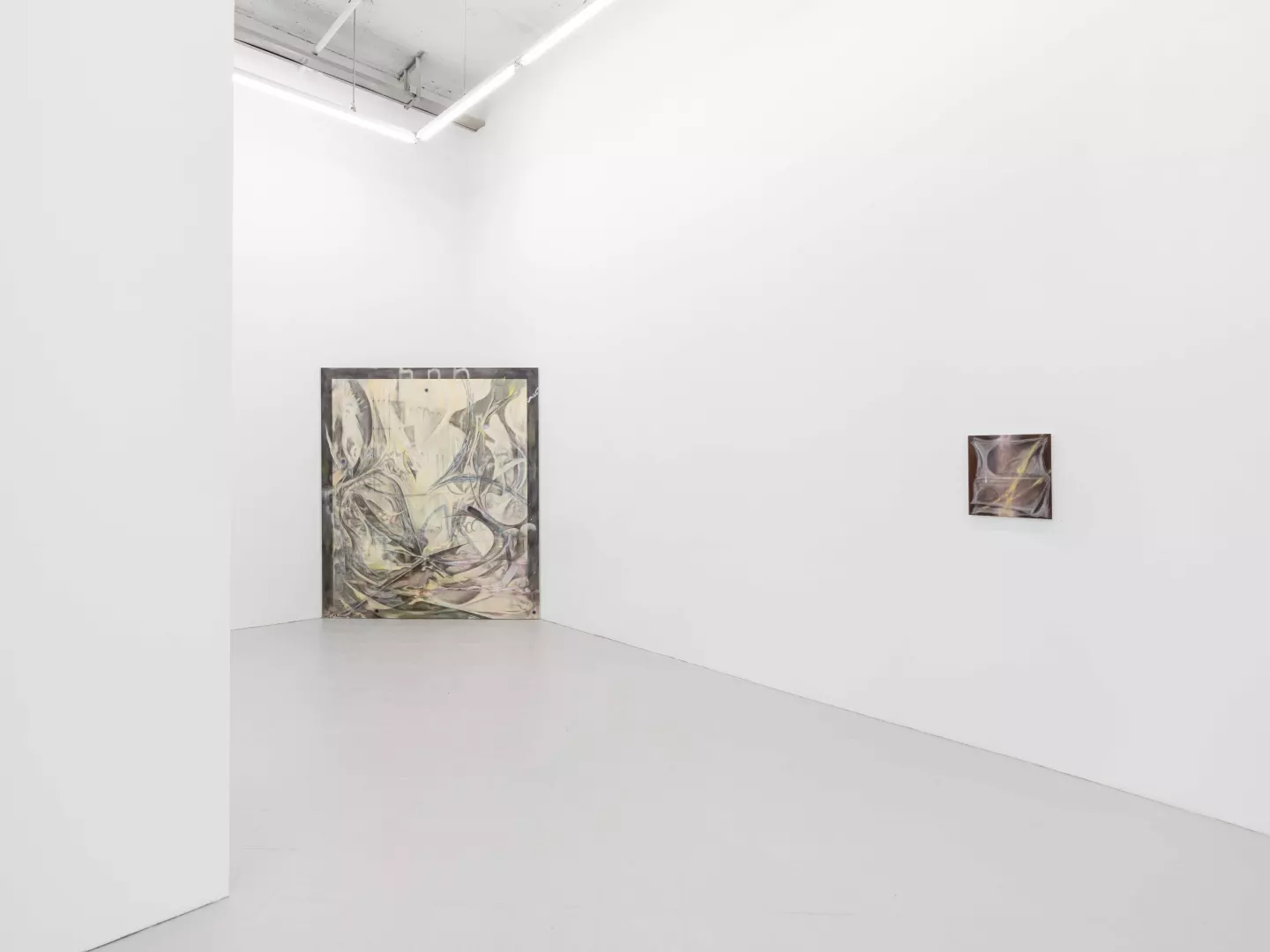
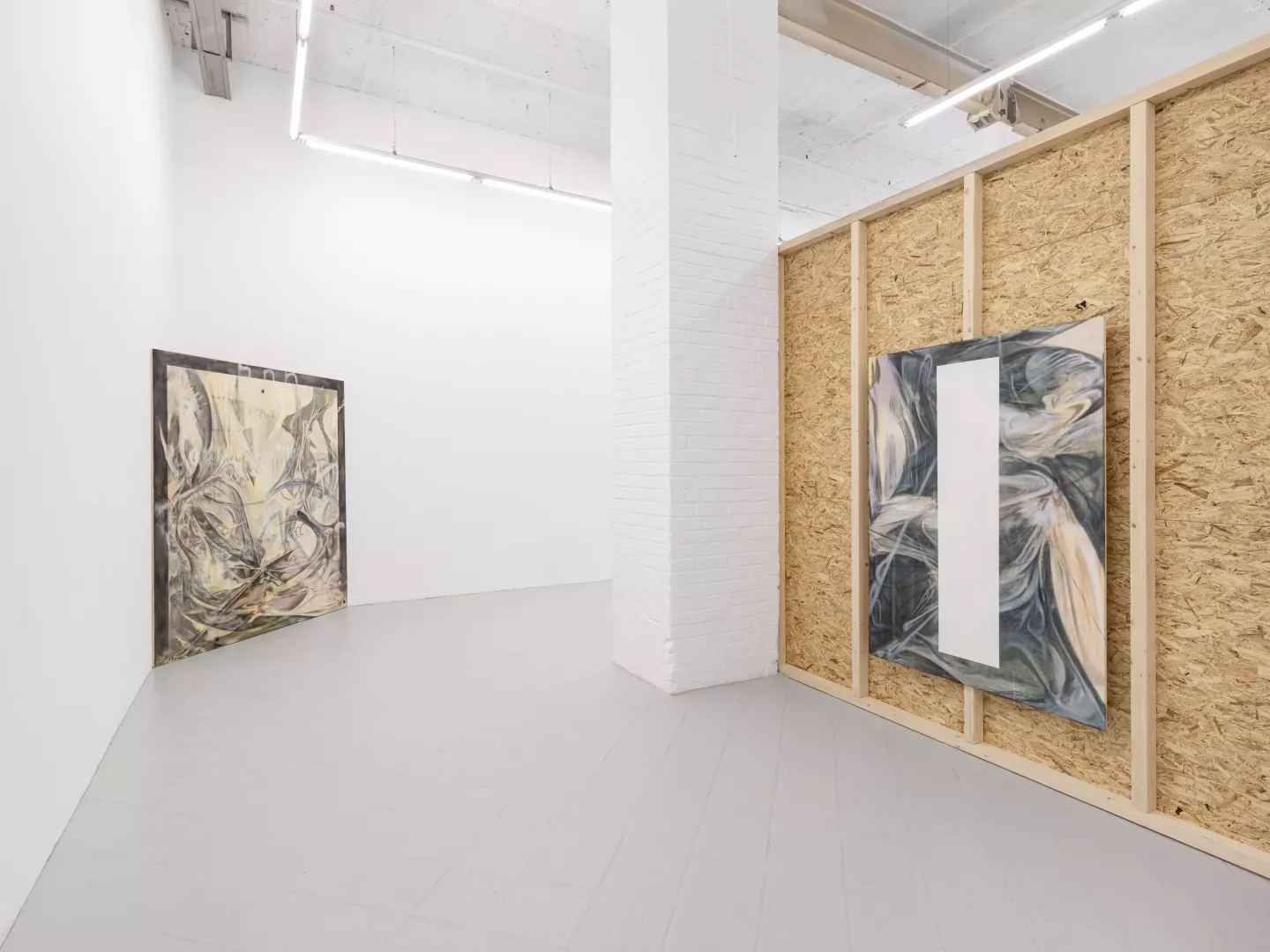
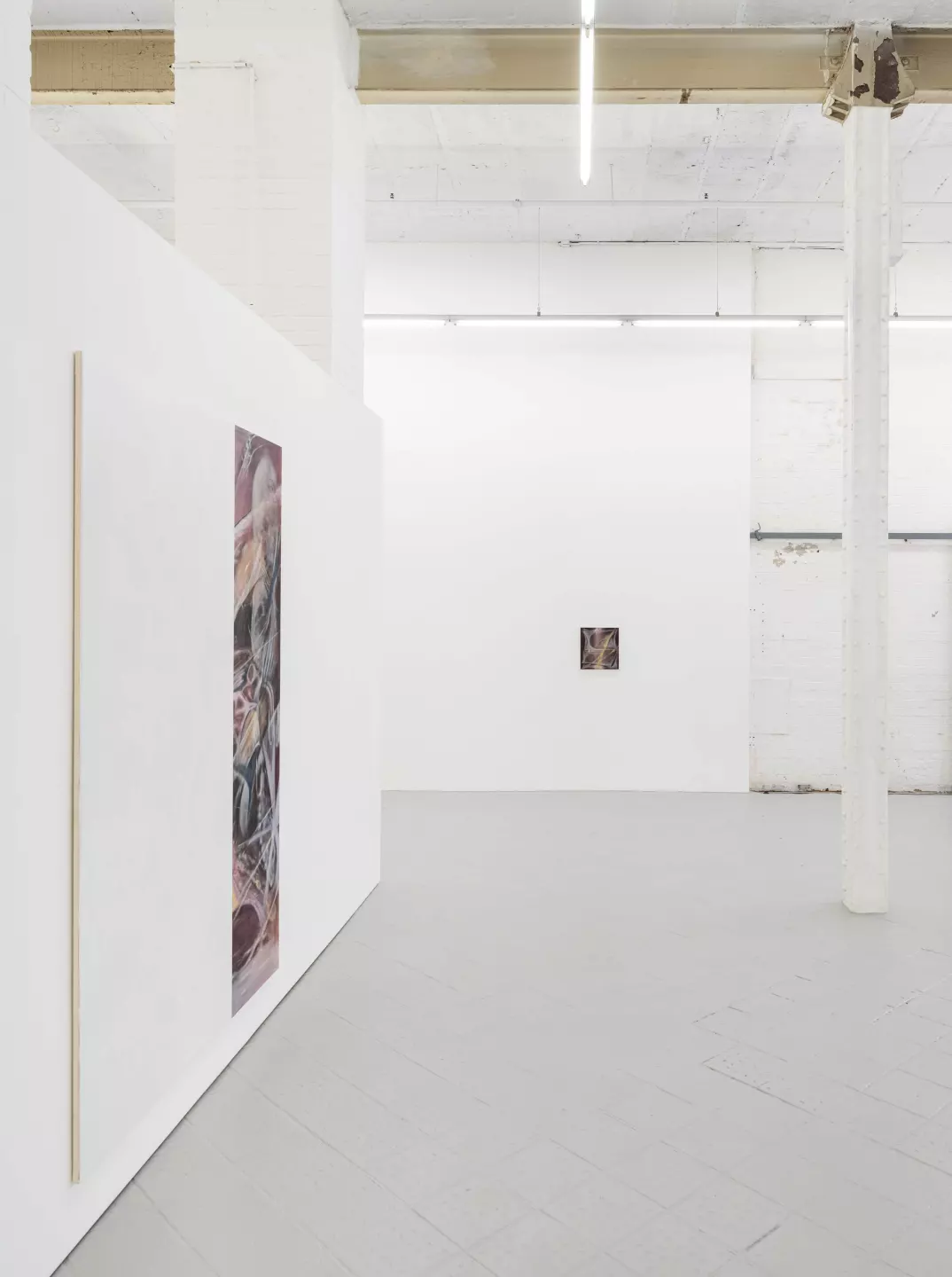
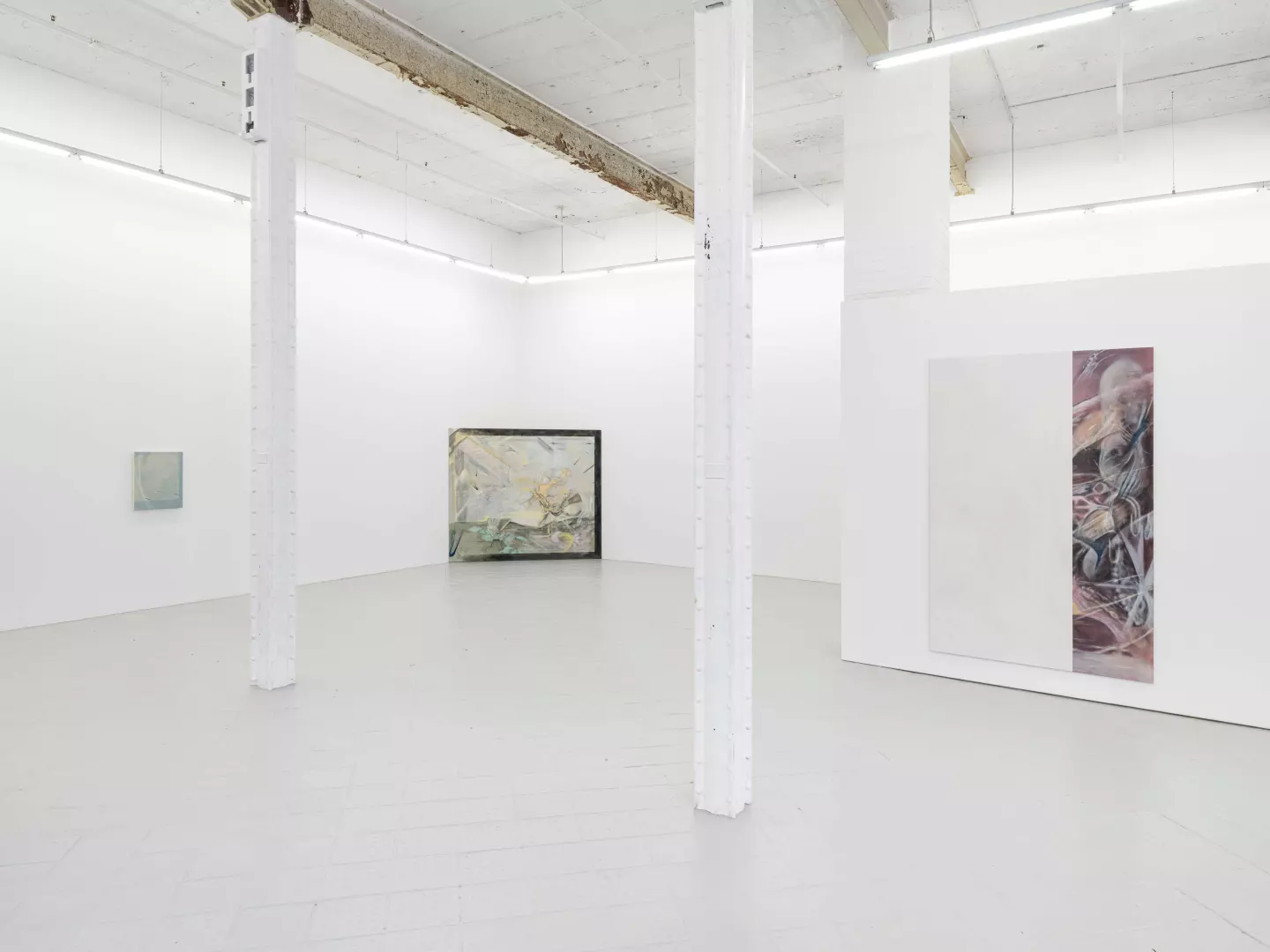
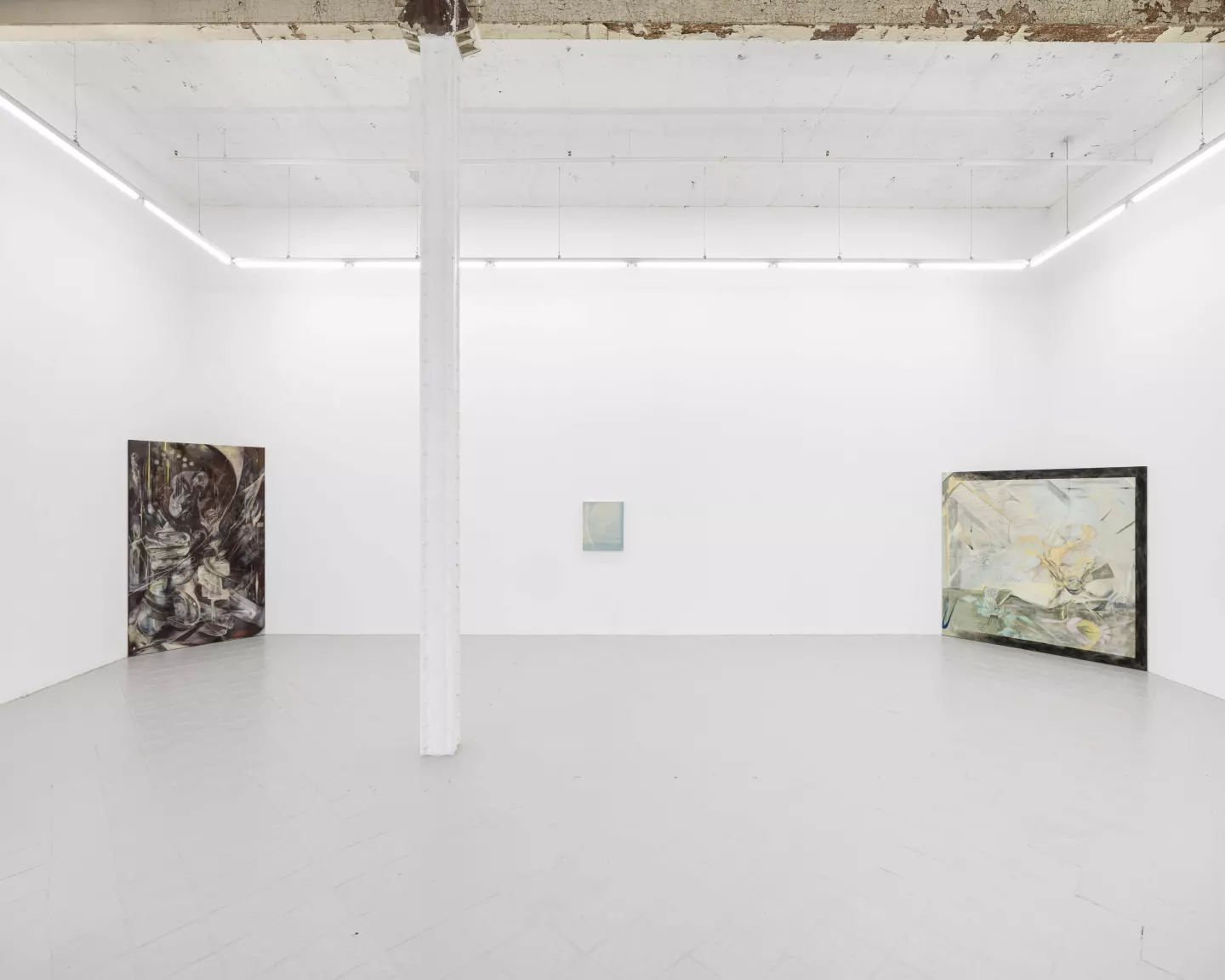
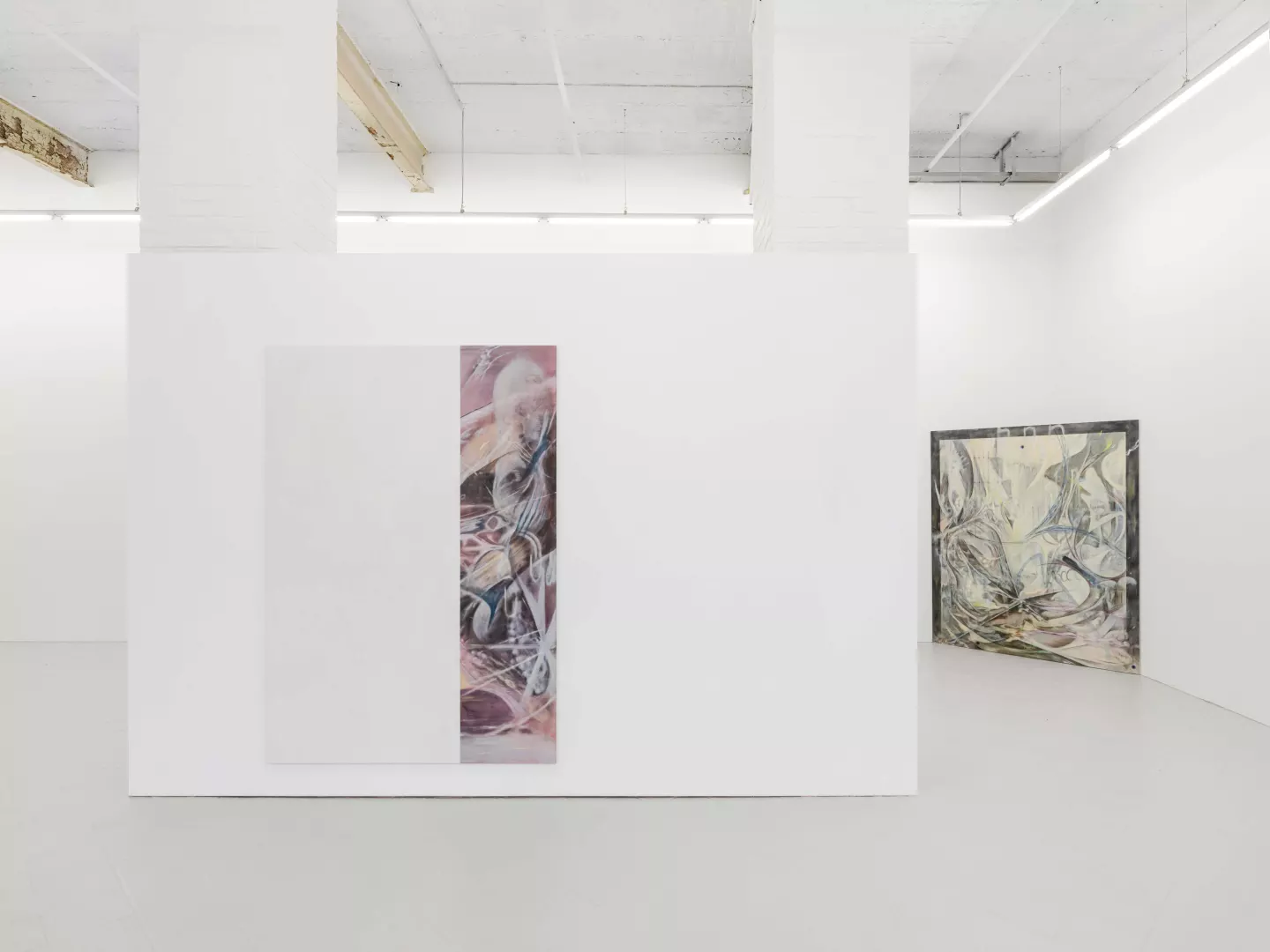
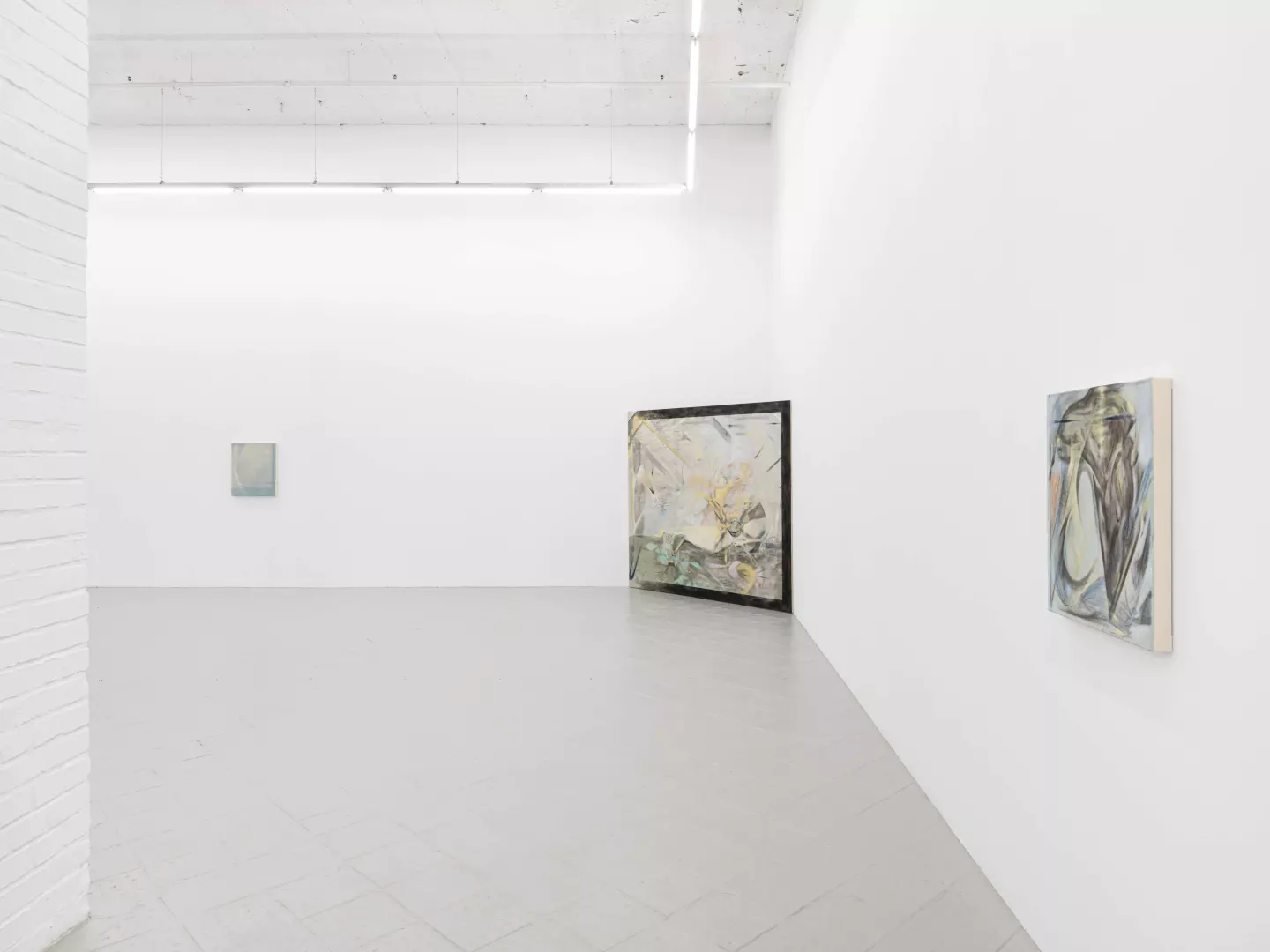
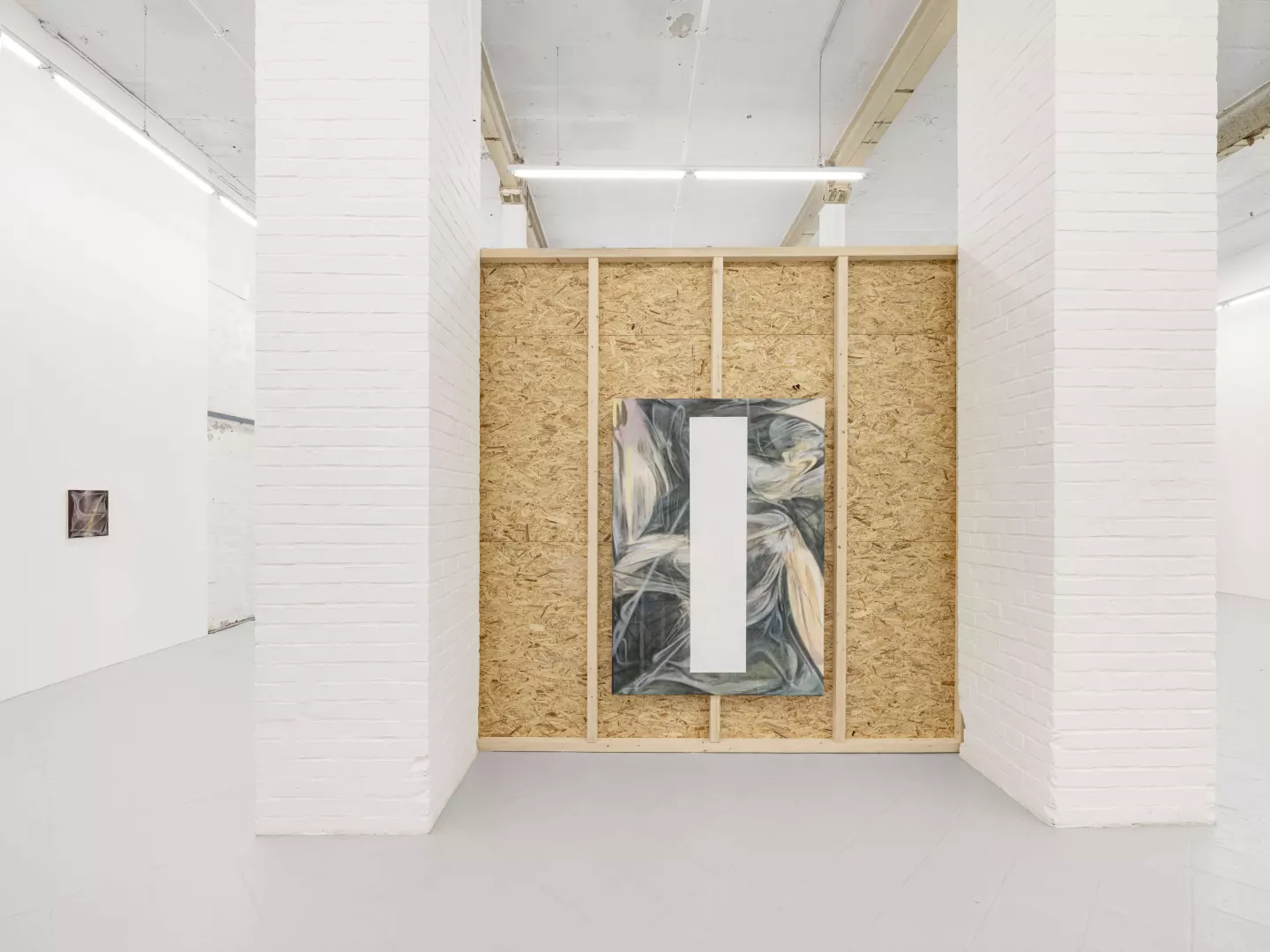
The paintings of Kolja Kärtner Sainz take shape along a narrow ridge. Apparent opposites meet there: graphic notations, spontaneous gestures and seemingly incidental traces connect and layer over painterly forms, signs and fields of colour, forming network-like structures. Each of them is part of an ongoing, iterative search that follows no linear path, instead approaching and receding from painting itself in a manner both tactile and tentative.
To articulate what can be seen in Kärtner Sainz’s paintings, one might speak of topographies that seem at once like remnants and blueprints, temporally ambiguous, suspended somewhere between archaic trace and futuristic vision; of cold, technological incisions running up against organic curves; of forms reminiscent of signs, bodily fragments or architectural elements. Occasionally, frame-like structures layer transparently over the painting. They frame the image as if through a portal, structuring the pictorial space without fixing it conclusively. At the same time, a graphic lightness permeates the works: lines, brackets, and markings that seem placed almost in passing, setting the picture plane into shimmering motion and vibrant unrest.
«There’s a thing that escapes me the whole time,»¹ writes Clarice Lispector. A similar urgency of withdrawal marks Kärtner Sainz’s practice. Painting appears in it not as a presupposed medium but as a counterpart that continuously shifts at the very moment of approach. Each mark alters the whole. It brings something forth, yet simultaneously reveals that something else remains indeterminate. The picture remains an elusive counterpart that cannot be fully possessed
For Kärtner Sainz, this experience of withdrawal becomes a working method. His paintings emerge from an interplay of immediate mark-making and subsequent questioning, intuition and reflection, figuration and abstraction. These poles are not resolved within the picture plane but held in tension. Every placement demands both proximity and distance — a relationship that, with Maurice Merleau-Ponty, might be described as «possession at a distance.»² Each mark is assertion and question at once. It is examined, reworked, perhaps painted over, concealed, or folded back into the image. The paintings are constructed without preparatory sketches, emerging directly within the process. They can be described as sites of continuous decision-making, as records of gestures and traces, of thinking through and within the material. This thinking does not happen prior to painting, but unfolds with material actions: in applying, soaking in, reworking, concealing, and folding inward. Kärtner Sainz works oil, ink, and pigment into the canvas so that the pigment does not merely sit on the surface, but penetrates the fabric, forming its own distinct weave with it. The materiality of the support becomes almost palpable to the eye. Earlier states, signs, and decisions remain present as sedimented layers within the painting’s skin; what seems to disappear is not erased but persists as trace and resistance within the painterly structure.
From this accumulation of gestures, signs, and overpaintings, fields of temporary order emerge. Kärtner Sainz pushes them to a point where they are just stable enough to sustain themselves, while remaining on the verge of tipping back into chaos. Order does not appear here as a given framework, but as something that arises within the process and can become unstable at any moment. Individual gestures and forms act like recurring elements of an open system of signs: they mark, refer, interrupt, and connect without settling into fixed symbols. The paintings do not tame chaos, nor do they translate it into intelligible units. To borrow from Gilles Deleuze, one might say: they struggle with chaos.³
As in a stream of thought whose destination continually evaporates, what matters in these paintings is less the isolated mark than its concatenation with what precedes and follows it. Thus, on the pictorial plane, the tentative encounter with painting repeats itself. At its heart lies the rhythm of many small interventions: repetitions, interruptions, pauses, condensations, openings, and closures. Duration materializes as a fragile order that asserts and withdraws itself in the very same moment. What remains is a form that keeps visible its own history of becoming and its precariousness: a provisional order that, in this one moment, is infinite.
¹Clarice Lispector, Água Viva, p. 63.
²Maurice Merleau-Ponty, Eye and Mind, p. 284.
³See Gilles Deleuze, What Is Philosophy?, p. 243.
Text : Alicja Schindler
Works
-
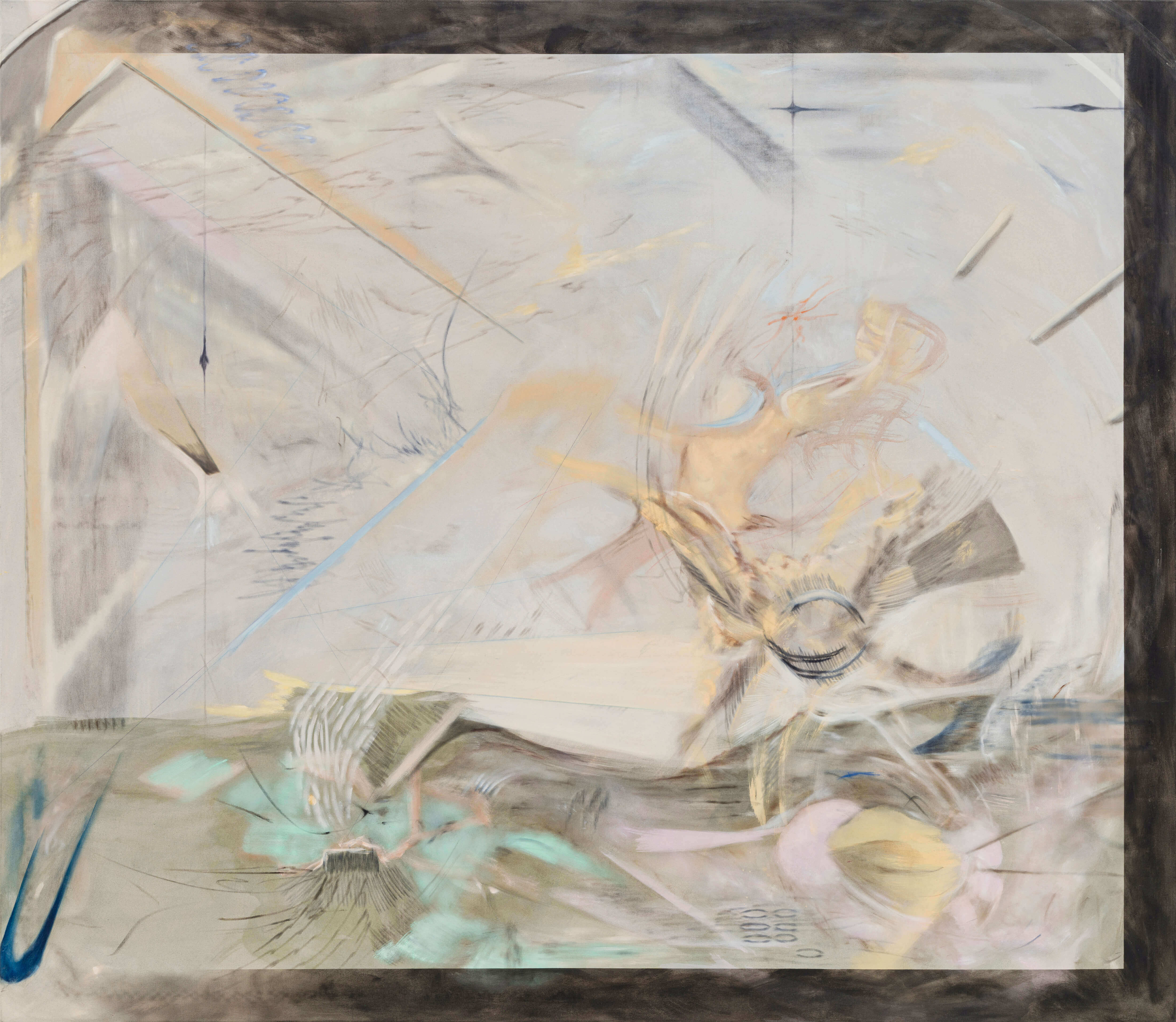 Kolja Kärtner Sainz, A Scattering (There is a thing that escapes me the whole time), 2026, oil and ink on canvas, 230 × 200 cm
 -
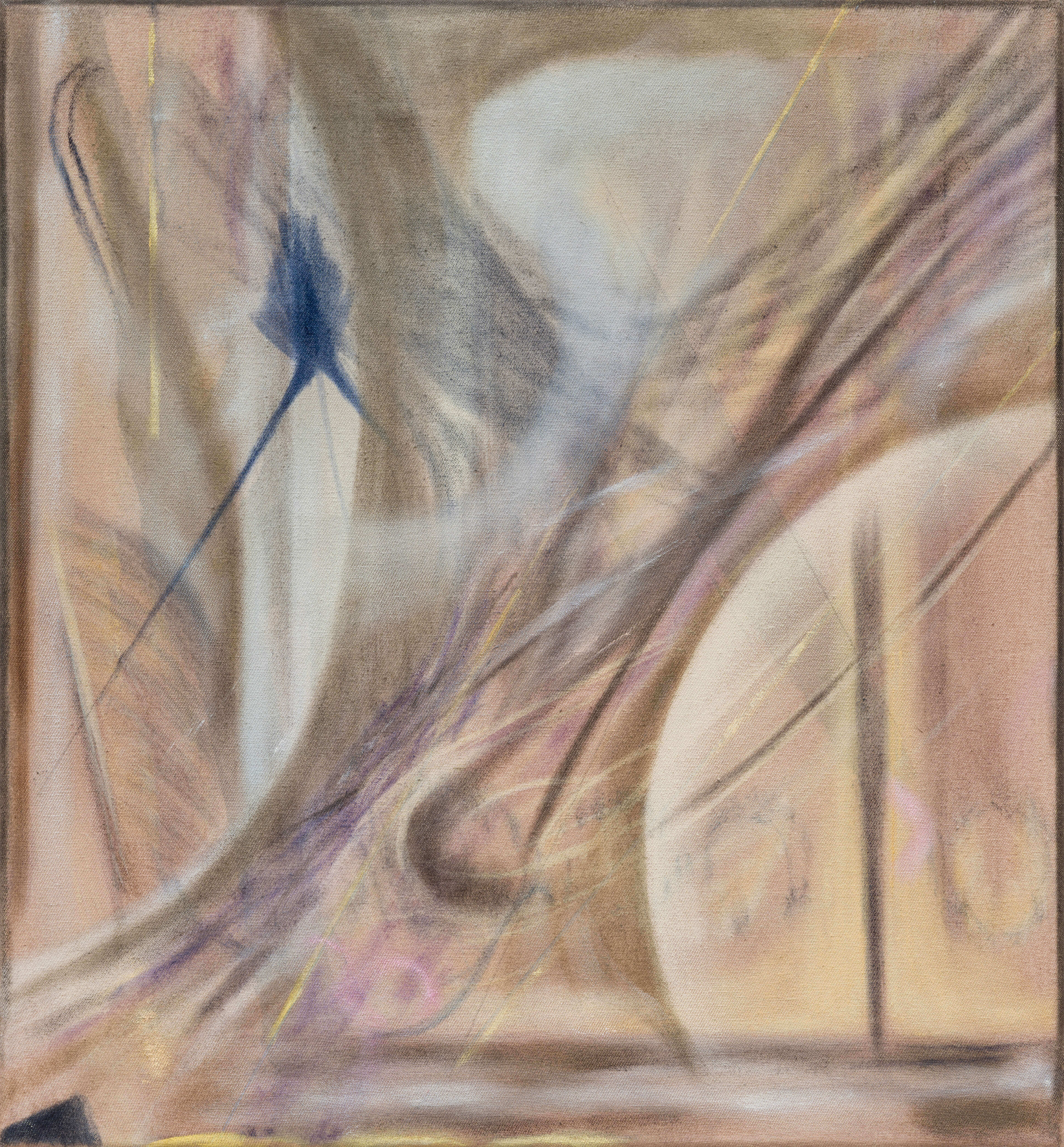 Kolja Kärtner Sainz, Untitled, 2026, oil and ink on canvas, 40 × 37 cm
 -
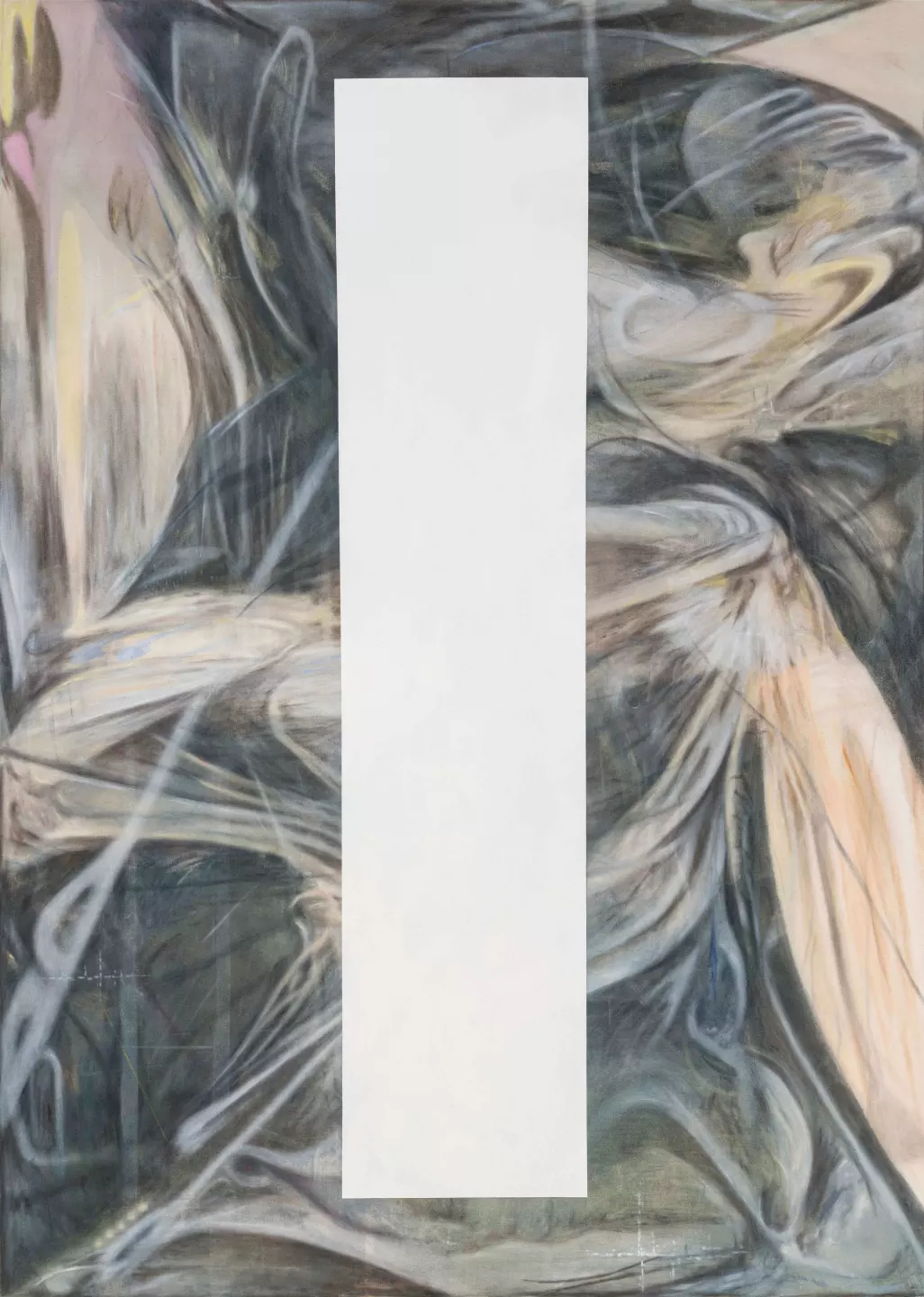 Kolja Kärtner Sainz, Elision No. 1, 2026, oil and ink on canvas, 175 × 125 cm
 -
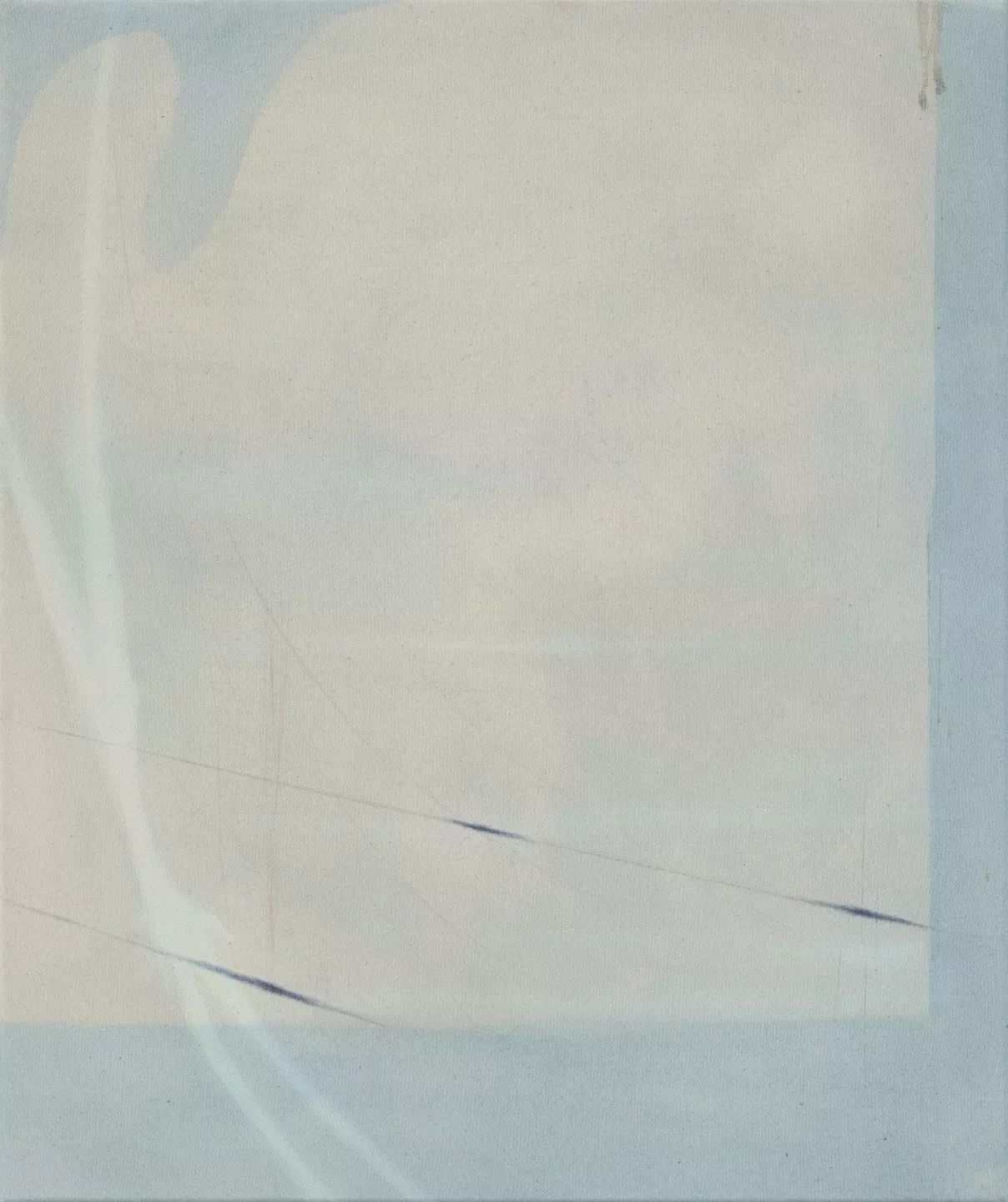 Kolja Kärtner Sainz, M Says.., 2026, oil and ink on canvas, 60 × 50 cm
 -
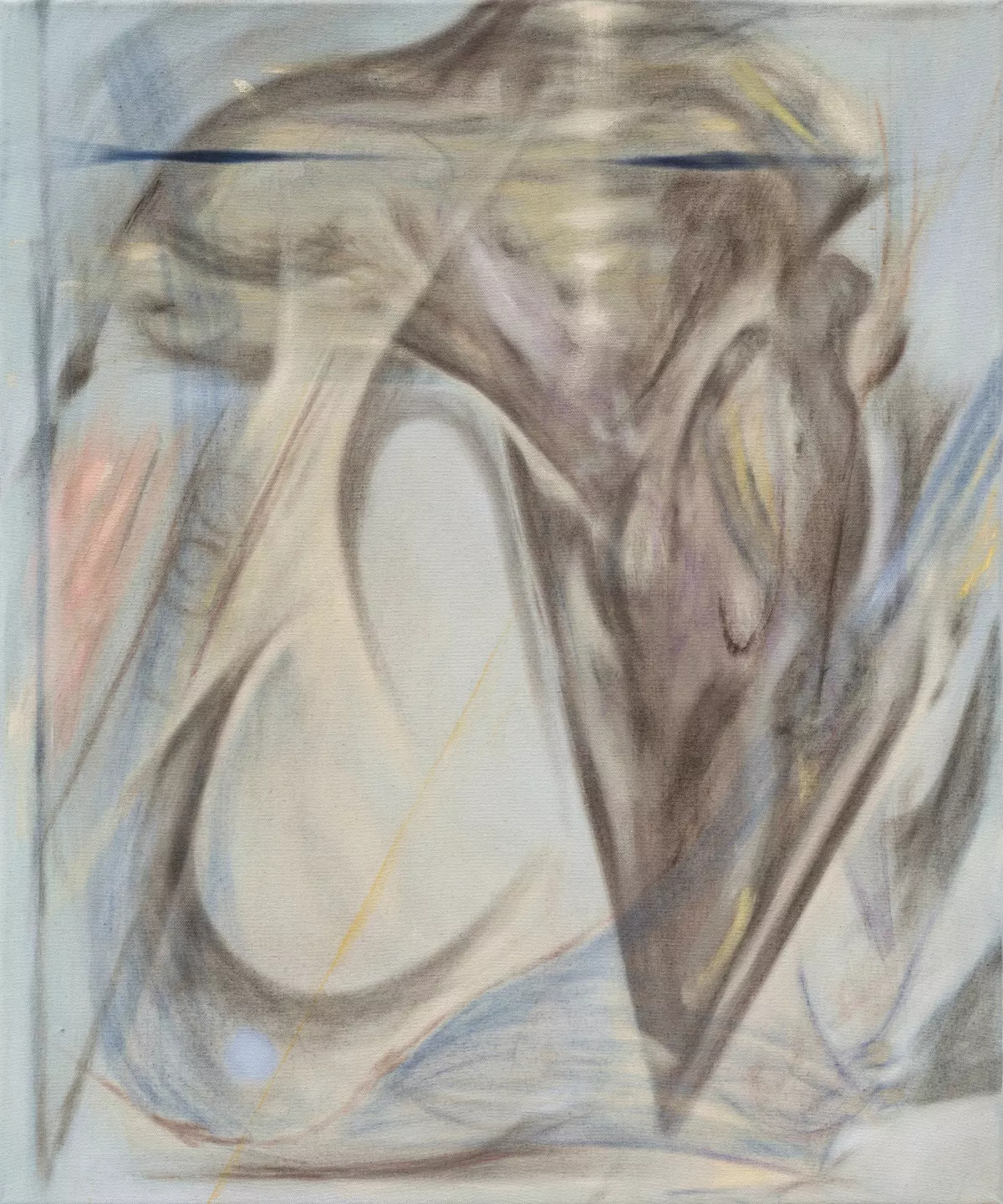 Kolja Kärtner Sainz, Untitled, 2026, oil and ink on canvas, 60 × 50 cm
 -
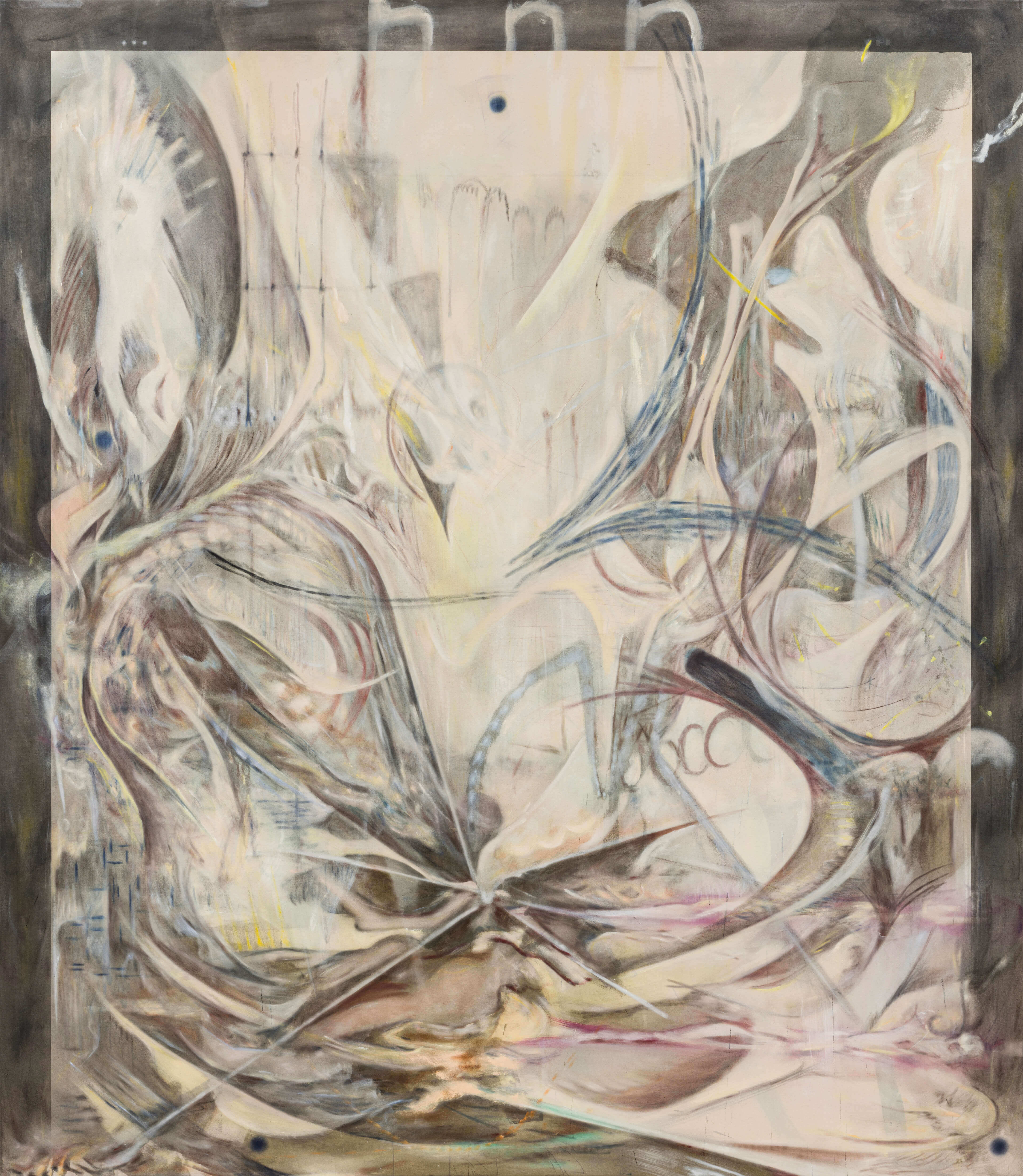 Kolja Kärtner Sainz, A Scattering (There is a thing that escapes me the whole time), 2026, oil and ink on canvas, 230 × 200 cm
 -
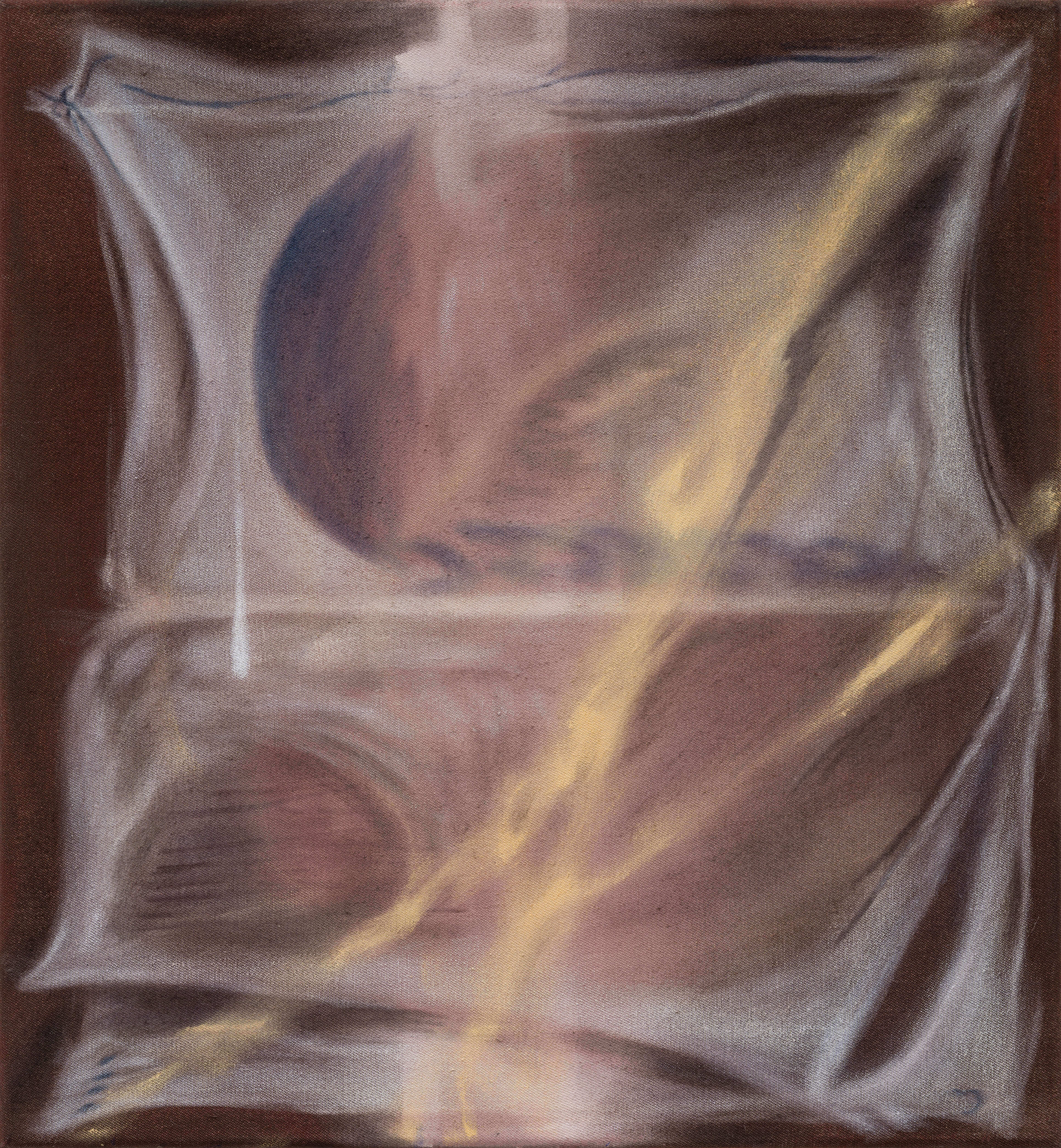 Kolja Kärtner Sainz, Untitled, 2026, oil and ink on canvas, 40 × 37 cm
 -
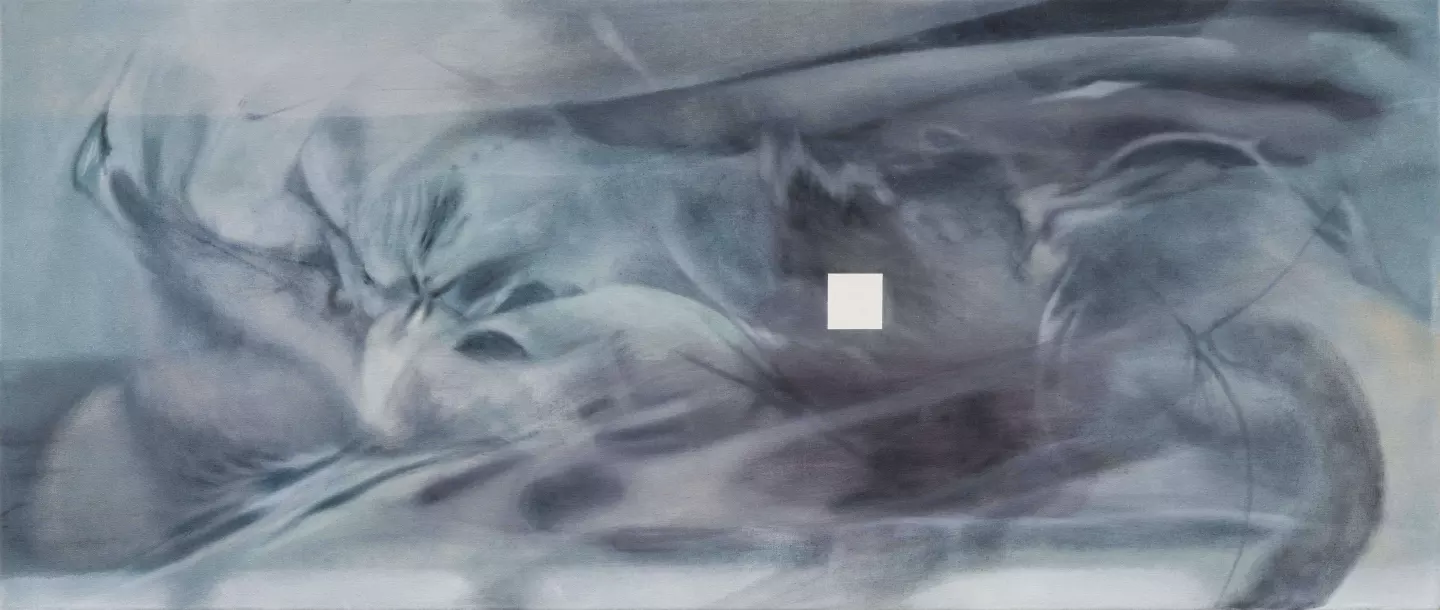 Kolja Kärtner Sainz, Elision No. 2, 2026, oil and ink on canvas, 60 × 140 cm
 -
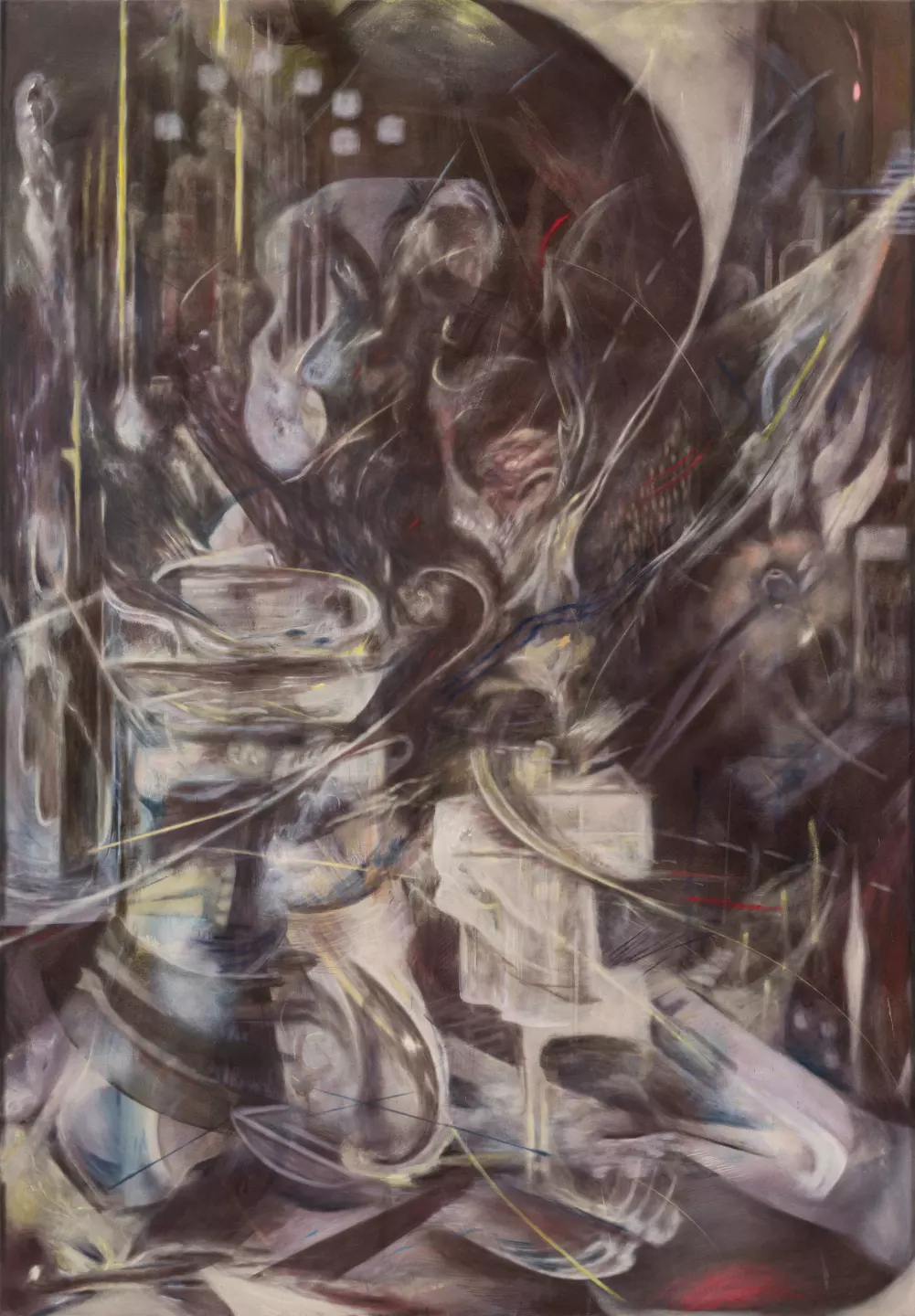 Kolja Kärtner Sainz, The Line is a Curve, 2026, oil and ink on canvas, 230 × 160 cm
Contact us for more information.